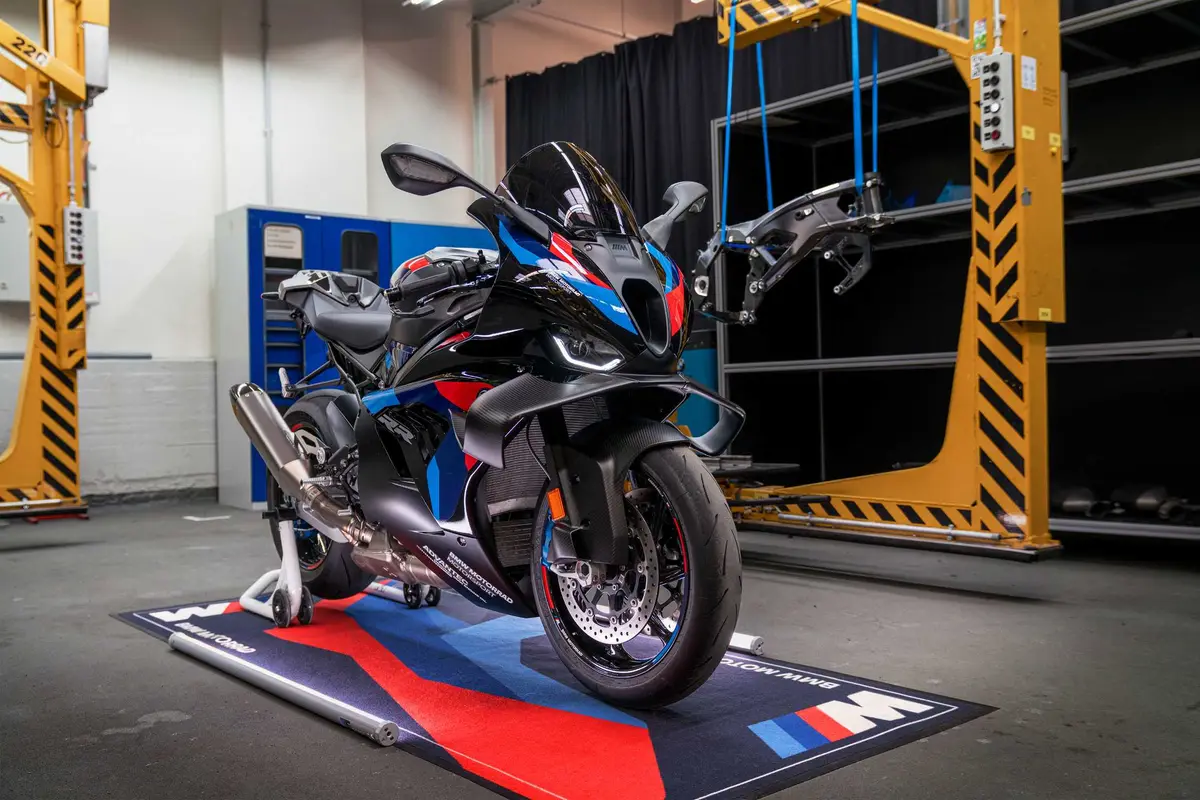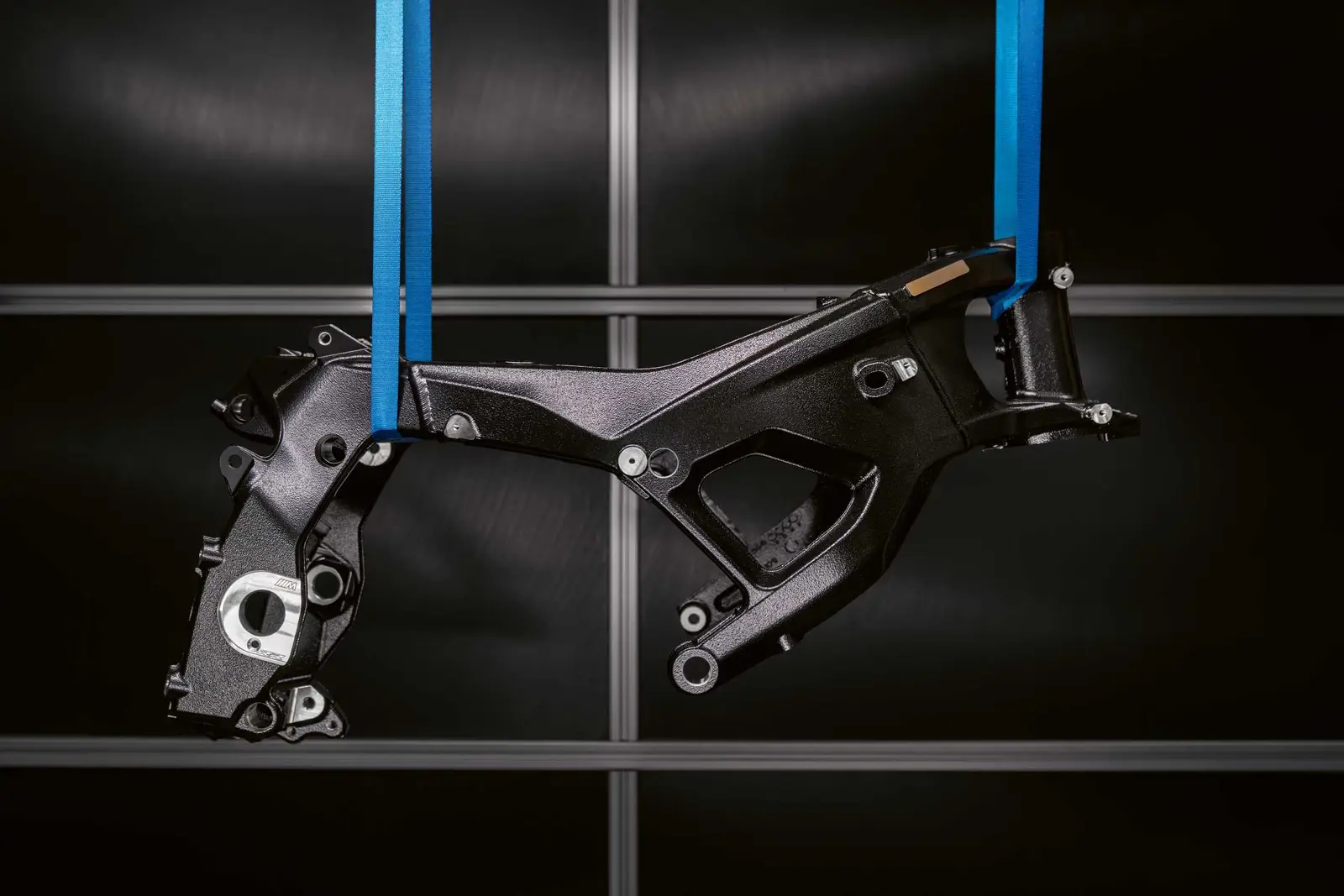
BMW Motorrad is giving its BMW M 1000 RR superbike a new frame. From model year 2027, the third generation of the M Motorsport frame will be fitted as standard, bringing lessons from international racing to the road going bike. BMW detailed the frame and how it is made in a new press release.
Lighter, with flex where it helps
According to BMW, the new aluminium frame is around 1.3 kg lighter than the previous version. Wall thicknesses have been reduced by up to 30 per cent, which lets engineers decide more precisely where the frame stays stiff and where it is allowed to give.
This is how BMW describes the result:
- At lean, the frame can flex sideways to a defined degree, helping the suspension soak up bumps in the road surface
- Lengthwise, it stays stiff, so braking and drive forces are passed on precisely and the bike responds predictably under high loads
- Riders should get more consistent tyre contact, clearer feedback and more even tyre wear
“The new M Motorsport frame combines consistent lightweight construction with precisely tuned stiffness and flex characteristics,” said Sven Blusch, Head of BMW Motorrad Motorsport.
The same frame is used by the BMW Motorrad factory teams, by customer racing teams around the world and in the series production bike, so what is learned on track feeds straight back into the part sold to customers.
Built across three BMW sites
The frame comes out of a process chain that spans three locations. In Munich, BMW Motorrad Development designs the geometry, wall thicknesses and stiffness distribution digitally, then checks them in simulations, on test rigs and in riding tests.
BMW Group Plant Landshut casts the four main parts in aluminium using low pressure casting: the steering head, the left and right side sections and the rear section. Temporary quartz sand cores form the hollow spaces inside the thin walled castings, and a core shooting simulation is run before any tooling is built so the process is reliable from the start.
The Berlin motorcycle plant then welds, coats and machines the frame and carries out the final quality inspection.
What it means for riders
For owners, BMW promises sharper turn in, more transparent responses from the bike and more confidence in demanding situations, especially on a racetrack. These are the company’s own claims, and independent test results were not part of the announcement.
Other outlets add useful context about the wider 2027 update. BRM reported that the 2027 bike is the fourth evolution of the M 1000 RR since its debut in 2021, and that the overall weight is expected to stay close to the outgoing model. The reason is that M Forged wheels replace carbon wheels as standard equipment, while the M Carbon wheels move to the optional M Track Package together with the M Endurance Chain. Visordown reported the same wheel change.
Pricing was not part of BMW’s frame announcement, and BRM noted that full technical specifications and prices are yet to be announced. Riders interested in the 2027 M 1000 RR should check with their local BMW Motorrad dealer for market details.