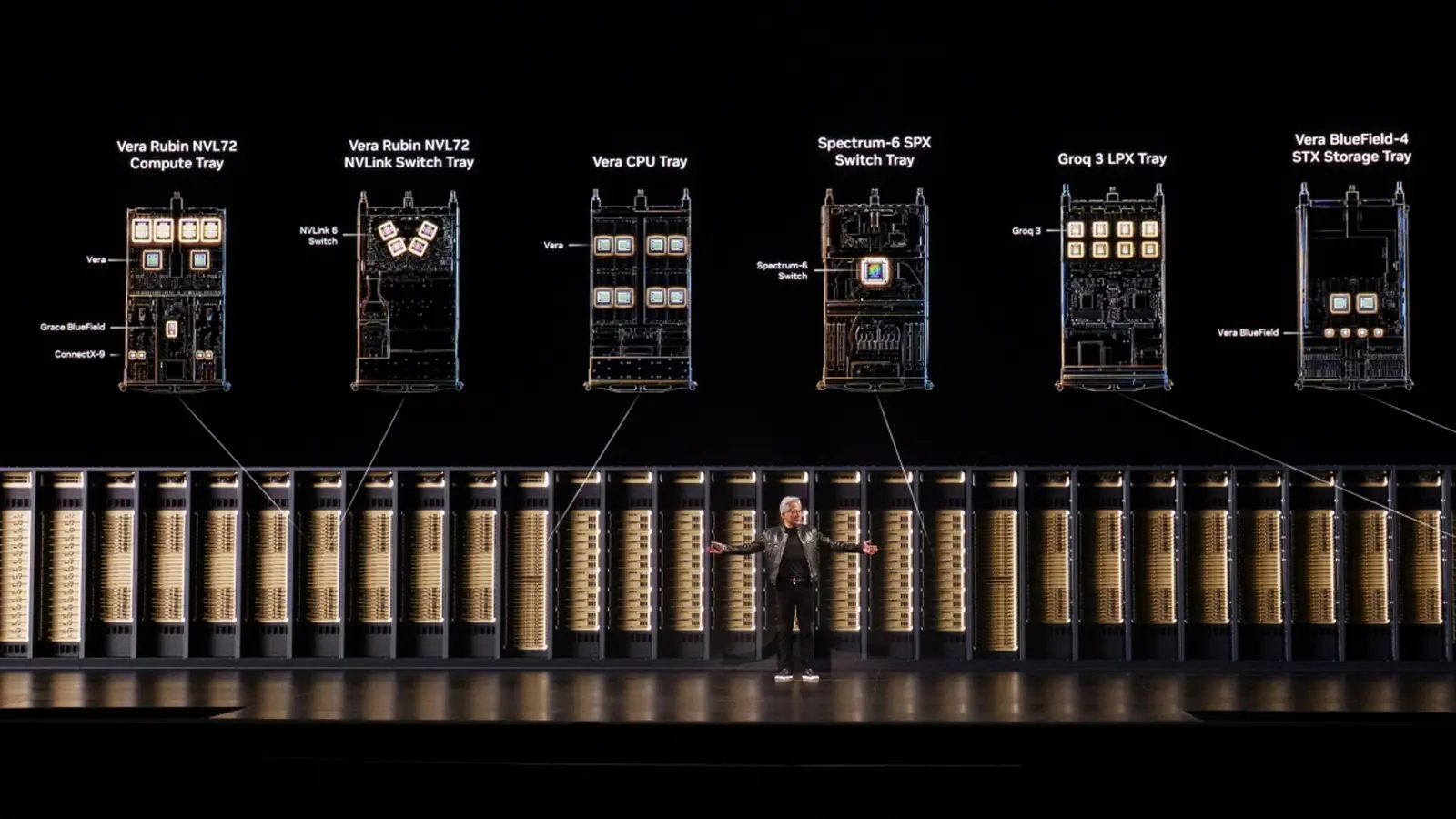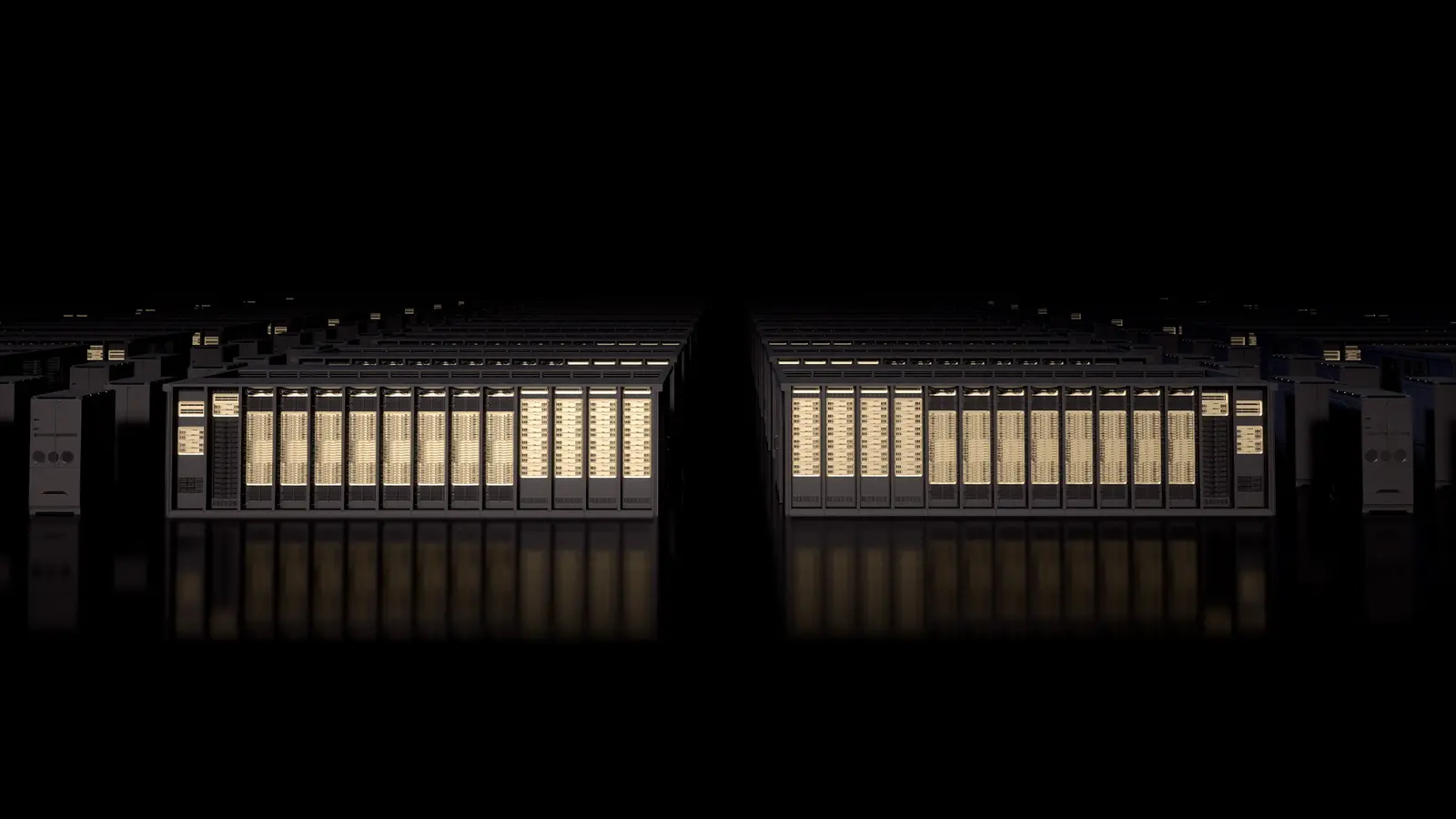
Teams that train AI models pay for every hour their GPUs run, so a faster system means a smaller bill and an earlier launch. On November 16, 2026, NVIDIA said its new Vera Rubin NVL72 system delivered up to 2x more performance per GPU than the GB300 NVL72 in MLPerf Training v6.1, the benchmark round published by MLCommons.
NVIDIA also says it was the only platform with results on every benchmark in the round, and that in its first MLPerf Endpoints entry Vera Rubin delivered more than 10x the throughput per watt of GB300 NVL72 for agentic AI. NVIDIA makes both systems, so these are its own claims about its own entries.
What did MLPerf Training v6.1 test?
MLPerf Training measures how fast a system can train a model to a target level of accuracy. According to MLCommons, the round drew 153 systems and 250 test results from 24 organizations. Cloud systems made up 57 of the entries, or 37% of the total, up from 29% in the previous round. 12 systems used 1,000 or more accelerators, and the largest used 10,240.
Two benchmarks are new. DLRMv4-HSTU is a recommender test, and Qwen3.5-397B is the first post-training benchmark in the suite. NVIDIA says its results spanned large language models, image generation, recommender systems and reinforcement learning post-training.
How fast is Vera Rubin?
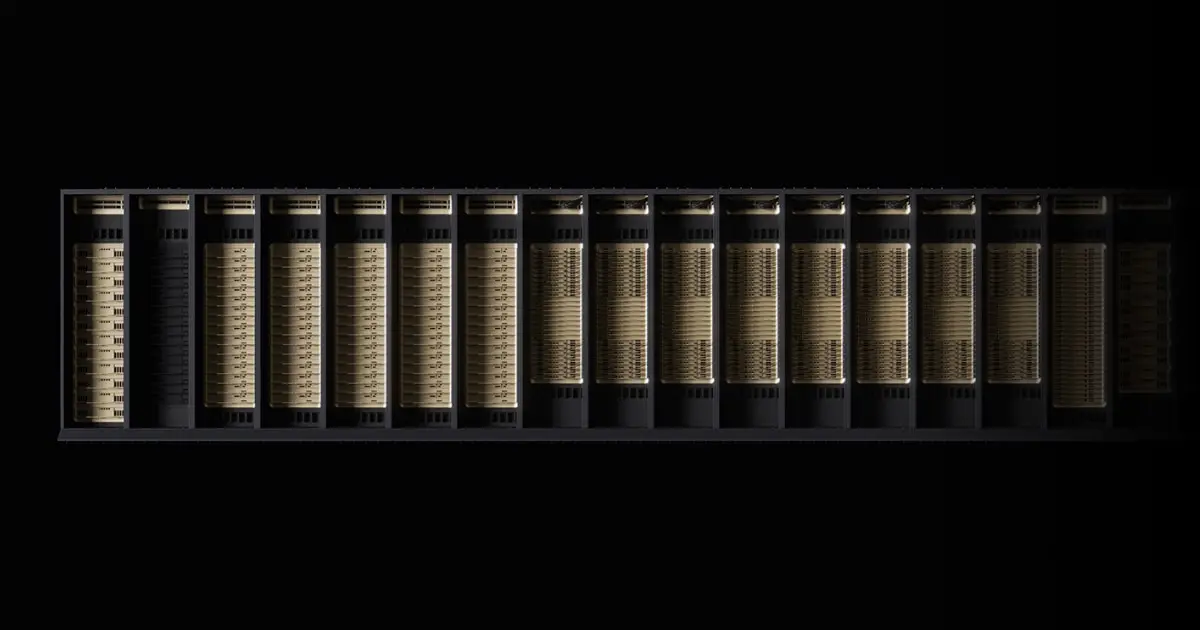
The headline claim is the per-GPU gain over the GB300 NVL72, which NVIDIA calls an early result. The company also stressed scale, because adding GPUs only helps when they work together efficiently.
- Up to 2x more performance per GPU than GB300 NVL72, according to NVIDIA
- On the DeepSeek-V3 benchmark, Vera Rubin NVL72 scaled from 256 to 1,024 GPUs at about 97% efficiency
- Quadrupling the GPUs cut training time from 16 minutes to about four
- NVIDIA also ran the benchmark on 10,240 GPUs with GB300 systems, the largest scale in the round, and Microsoft Azure matched that with 10,240 GPUs on GB200 systems
NVIDIA credits NVLink for linking the GPUs inside each system, and Quantum-X800 InfiniBand and Spectrum-X Ethernet for linking systems across the data center. It adds that Vera Rubin performance should keep climbing through software optimization.
What about agentic AI inference?
MLPerf Endpoints tests systems on agentic coding and enterprise workflows and checks that the agents still finish their tasks correctly. The measure is how many tokens a system produces for every watt, which matters because AI data centers are limited by power.
In a provisional result for Kimi K3, an open model built for agentic work, NVIDIA says Vera Rubin NVL72 delivered more than 10x the throughput per watt of GB300 NVL72 at the same response speed, compared at a shared minimum of 50 tokens/sec per user. The Vera Rubin run used 32 accelerators and an operating power of 100.89 kW. The GB300 run used 48 accelerators and 60 kW. NVIDIA notes the Vera Rubin figures are pending MLCommons verification and may change, while the GB300 results are verified.
NVIDIA also cites SemiAnalysis AgentX and Artificial Analysis AgentPerf as independent benchmarks where it leads.
How much does it cost?
NVIDIA lists no price or on-sale date for Vera Rubin NVL72 in this announcement. These are rack scale systems for AI data centers, so the realistic way to use one is through a cloud provider or a systems partner. Ask them directly about pricing and availability in your country.
Who it suits
Cloud and data center buyers. The power efficiency claim is the one to study, since power limits how many agents a site can serve. The figures come from one benchmark and one model, so ask for results on your own workload.
AI developers renting GPUs. Faster training can shorten iteration cycles, but only once a provider offers Vera Rubin and prices it. Nothing in the sources says when that happens.
Everyday readers. Nothing changes today. The result matters because it hints at how quickly new AI features can be trained and served later.
Who should wait. Anyone planning a purchase on these numbers. The Endpoints figures for Vera Rubin are provisional, and NVIDIA calls the training results early.
What is still unknown?
The announcement does not say when customers can get Vera Rubin NVL72, what it costs, or how results compare with other vendors in each benchmark. MLCommons lists AMD and Google among the accelerator makers in the round, so the full results page is the place to compare.
Read the MLCommons results page for the complete tables, and NVIDIA’s MLPerf Training and Endpoints technical blogs for the run details.