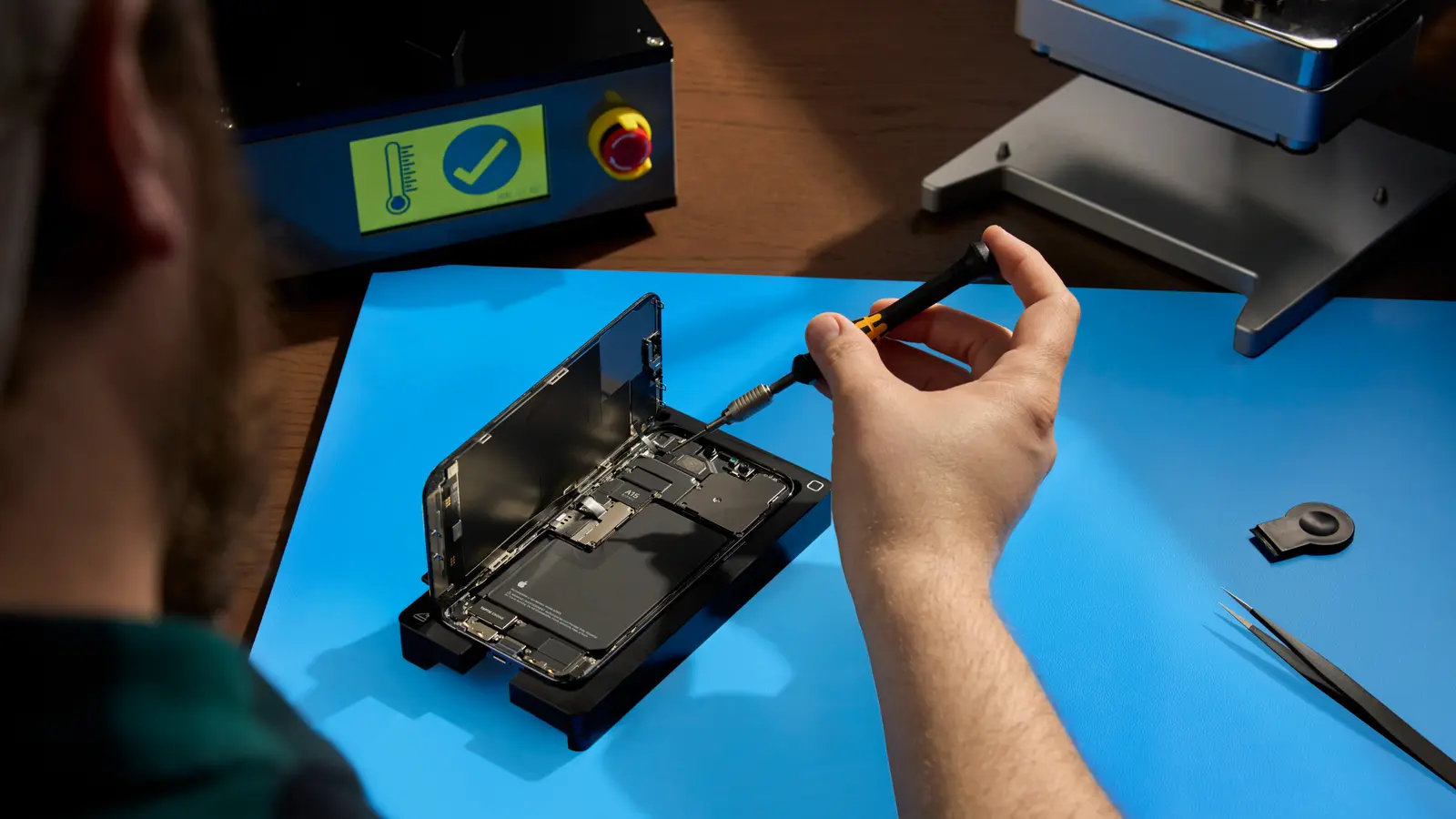
Apple has added its newest iPhones and desktop Macs to the Self Service Repair Store. Since October 20, 2026, owners of the iPhone 18 Pro and iPhone 18 Pro Max, the Mac Studio with M5 Max and M5 Ultra chips, and the Mac mini with M6 and M5 Pro chips can order genuine replacement parts and the tools needed to fit them, 9to5Mac and MacRumors reported.
MacRumors says the parts are on sale through the store in the U.S., Canada and Europe. Apple also publishes official repair manuals with step by step instructions for each part that can be replaced.
What you can replace on iPhone 18 Pro
According to 9to5Mac, the iPhone 18 Pro and iPhone 18 Pro Max categories cover these components:
- Back glass and enclosure
- Battery
- Display
- Rear camera and front camera
- Logic board
- Top speaker, bottom speaker and main microphone
- SIM tray
- Taptic Engine
Each category lists the matching parts along with the tools and supplies for the job, such as adhesive cutters, suction cups, nylon probes, adhesive removal tools, torque drivers and screws. These can also be bought on their own.
Camera price stays the same
The replacement rear camera costs $249, the same as for last year’s models, even though the iPhone 18 Pro and Pro Max add a new variable aperture system, 9to5Mac reported. Sending back the original camera earns a $59.76 credit, which brings the effective cost to $189.24. Apple says on its support site that for certain repair types, owners may receive credit when they return a replaced part, which is then refurbished or recycled.
Mac Studio and Mac mini parts
For the Mac Studio with M5 Max or M5 Ultra, the list runs from Thunderbolt and USB-C ports to fans, speakers, SSD modules, logic boards and power supplies.
The Mac mini with M6 or M5 Pro has a shorter list. It includes fans, speakers, logic boards, batteries and power supplies, among other parts.
What it means for you
Apple launched Self Service Repair in 2022 so people in eligible regions could buy official parts and buy or rent the tools for their own repairs. Apple’s support page is clear about who it is for: “Self Service Repair is intended for individuals with the knowledge and experience to repair electronic devices.” Some orders may also ask for the device’s serial number or IMEI.
If you have never opened a phone or computer before, an Apple Store or an Apple Authorized Service Provider is still the safer route. If you are comfortable with small screws and adhesive, the program now covers Apple’s latest Pro iPhones and desktops, and the unchanged camera price is useful to know if you are weighing a repair against a trade in. Check the official repair manual for your exact model before you order, and confirm the store serves your country.