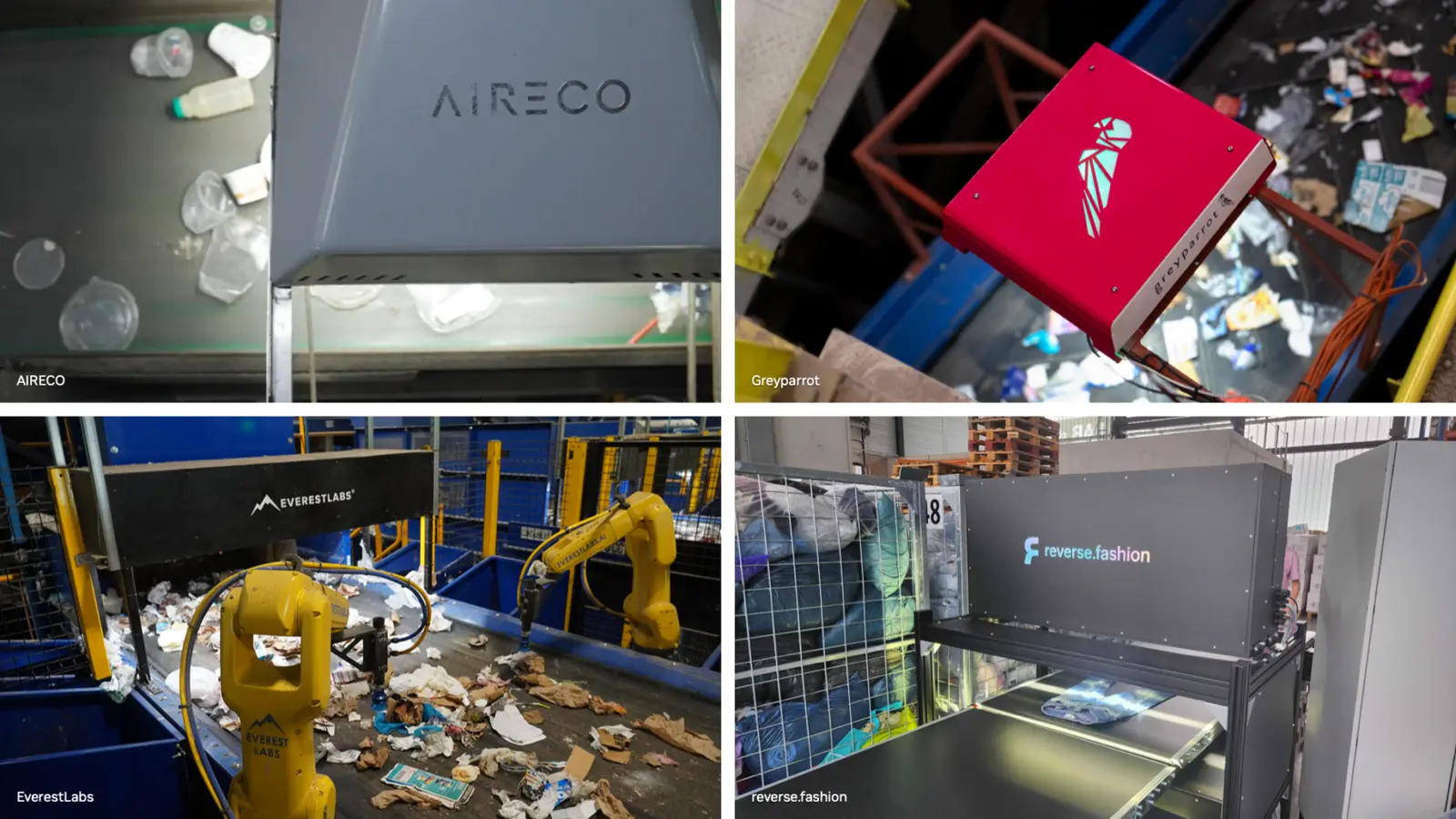
Four startups in the NVIDIA Inception program are using vision AI and robots to sort used clothing, bottles and mixed recyclables, according to a post on the NVIDIA blog. It was published as world leaders gather for COP31 in Türkiye, where zero waste is a stated emphasis.
NVIDIA puts the problem in numbers: less than 7% of the materials entering the economy come from recycled or reused sources, and municipal solid waste generation accounts for over 2 billion tons a year, a figure that could nearly double by 2050. All results below are company claims relayed by NVIDIA unless a second source is named.
How does AIRECO sort plastic more finely?
AIRECO is a Taiwan-based startup that argues finer sorting makes recycled plastic cheaper and better, so it can compete with new material. Its founder and CEO Chun-Feng Liu says the aim is for a plastic bottle to be recycled back into a bottle again and again.
- Hardware: NVIDIA Jetson Orin NX modules, which also drive robotic arms that pick items off the belt
- Where: a pilot line at a recycling plant in Tainan
- Accuracy: recognition tops 95% on the test line
- Plan: a full production line next year, aiming to raise annual capacity from 18,000 to 48,000 tons and cut operating costs by 85%
What do EverestLabs robots do on sorting lines?
EverestLabs AI, a U.S. startup, puts computer vision guided robots on the belts of material recovery facilities, the plants that separate household recyclables. About 150 robots are deployed in North America and Australia.
- Runs inference on NVIDIA RTX GPUs at the edge and trains on data center GPUs
- Estimates its systems have identified about 40 billion objects
- Estimates about 25,000 tons of material recycled and about 30,000 metric tons of carbon dioxide emissions avoided
- Adds agentic tools that give floor managers and executives data on their facilities
What does Greyparrot’s Analyzer measure?
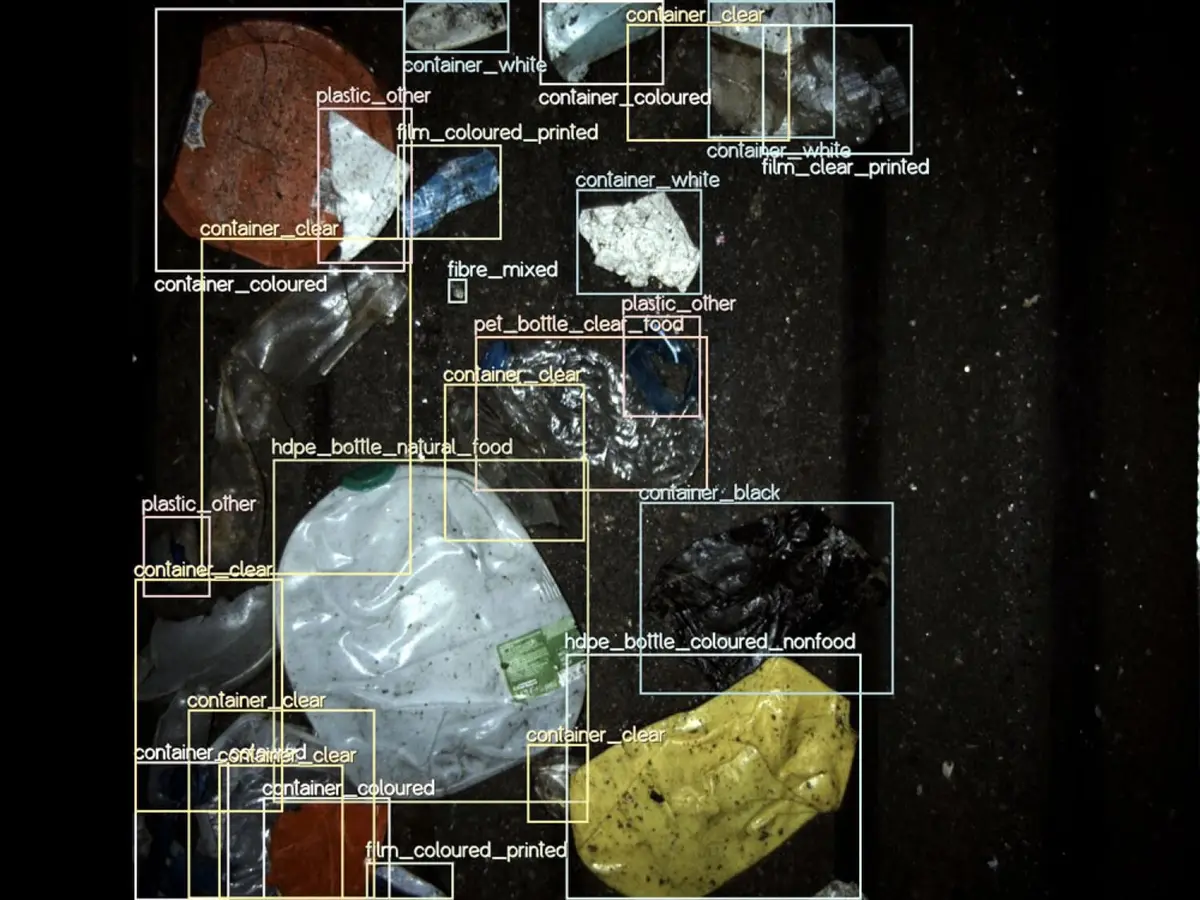
Operators have long judged what is on the belt by manually sampling less than 1% of it. The UK startup Greyparrot mounts its Analyzer above the belt, where it identifies each object by material and brand, even in dust or poor light, on belts moving up to 4 meters a second. Greyparrot’s own product page describes retrofittable units for materials recovery and plastics recovery facilities, with the data sent to a portal.
- More than 300 systems in over 20 countries
- Over a trillion bounding box detections to date
- Checking 15 tons of waste drops from 375 hours to six
- Facilities report efficiency gains of 10% to 30%
- Coca-Cola, Colgate-Palmolive and Kenvue also use it to measure how their packaging is recycled
How does reverse.fashion sort used clothing?
Europe generates nearly 7 million tons of used textiles a year, and about a quarter is collected separately and sorted by hand, which is slow and costly. The Berlin-based startup reverse.fashion uses high resolution computer vision to read product type, defects, color, size, brand, fabric construction, season and style, then assigns each garment to its most valuable category.
Each item crosses the belt at 3 meters a second and passes through over a dozen vision models on NVIDIA Jetson modules. Cofounder Karsten Pufahl estimates the system sorts in an hour what once took a week, and it is rolling out to facilities in Europe. Tech.eu reports garments are routed to reuse, repair, resale, upcycling or recycling, and that the company says customers can raise productivity by 40 per cent.
Are there prices?
None of the sources list prices, contract terms or pricing for any of these systems. They are sold to recycling operators, not to consumers.
Who it suits
Recycling plant operators. The common thread is replacing guesswork or manual sampling with continuous data, and in two cases robots that pick items in real time.
Brands and packaging makers. Greyparrot says Coca-Cola, Colgate-Palmolive and Kenvue use its data to see how packaging behaves in real sorting plants.
Textile sorters and resellers. reverse.fashion targets the hand sorting step that holds back resale of reusable garments.
Everyday readers. Nothing here is something you can buy. It shows where sorting technology is heading and why what you put in the bin may matter more.
What is still unknown?
The figures come from the companies, and AIRECO’s capacity and cost numbers are goals for a line that is not yet built. No source gives independent test results or costs. Check each startup’s website for deployment updates.