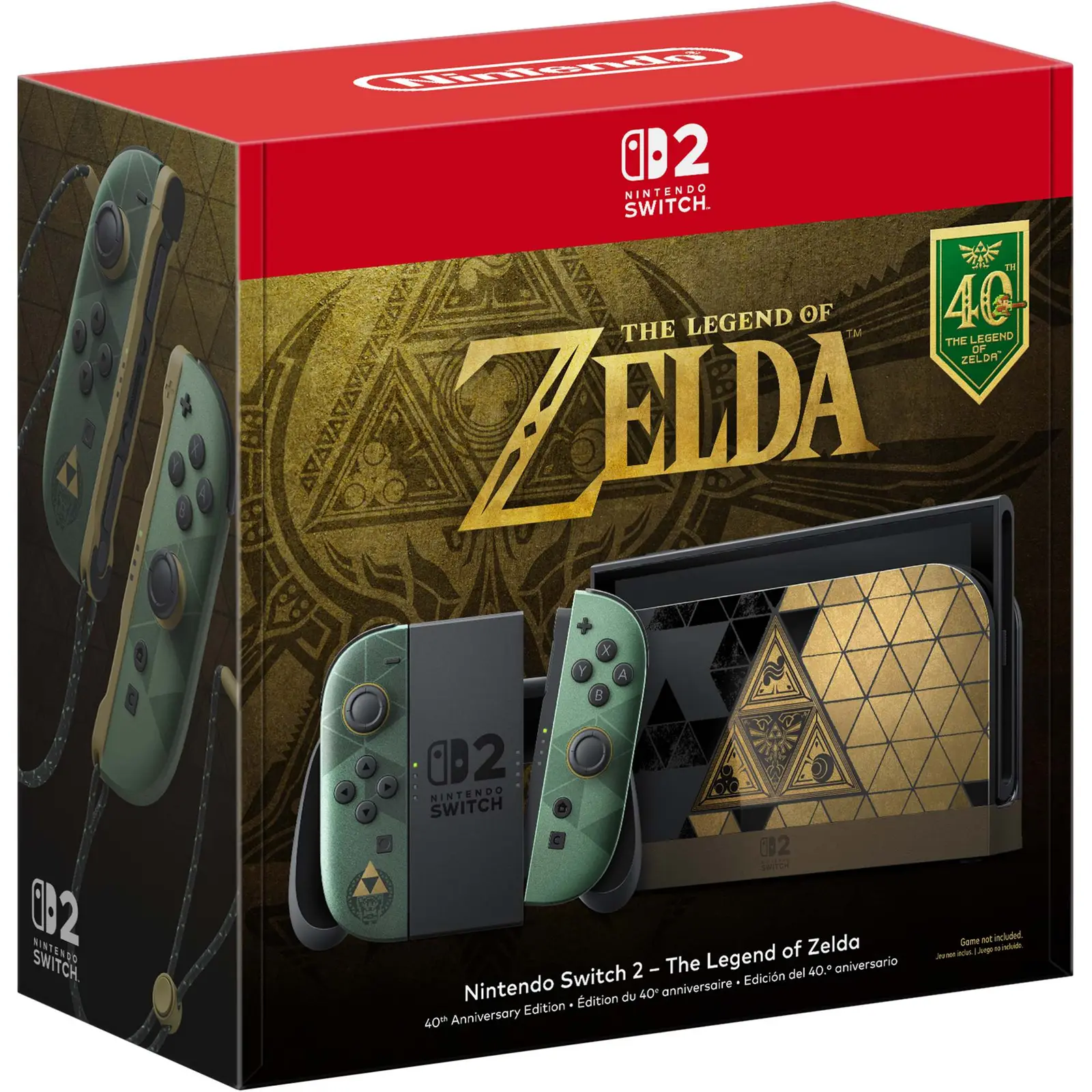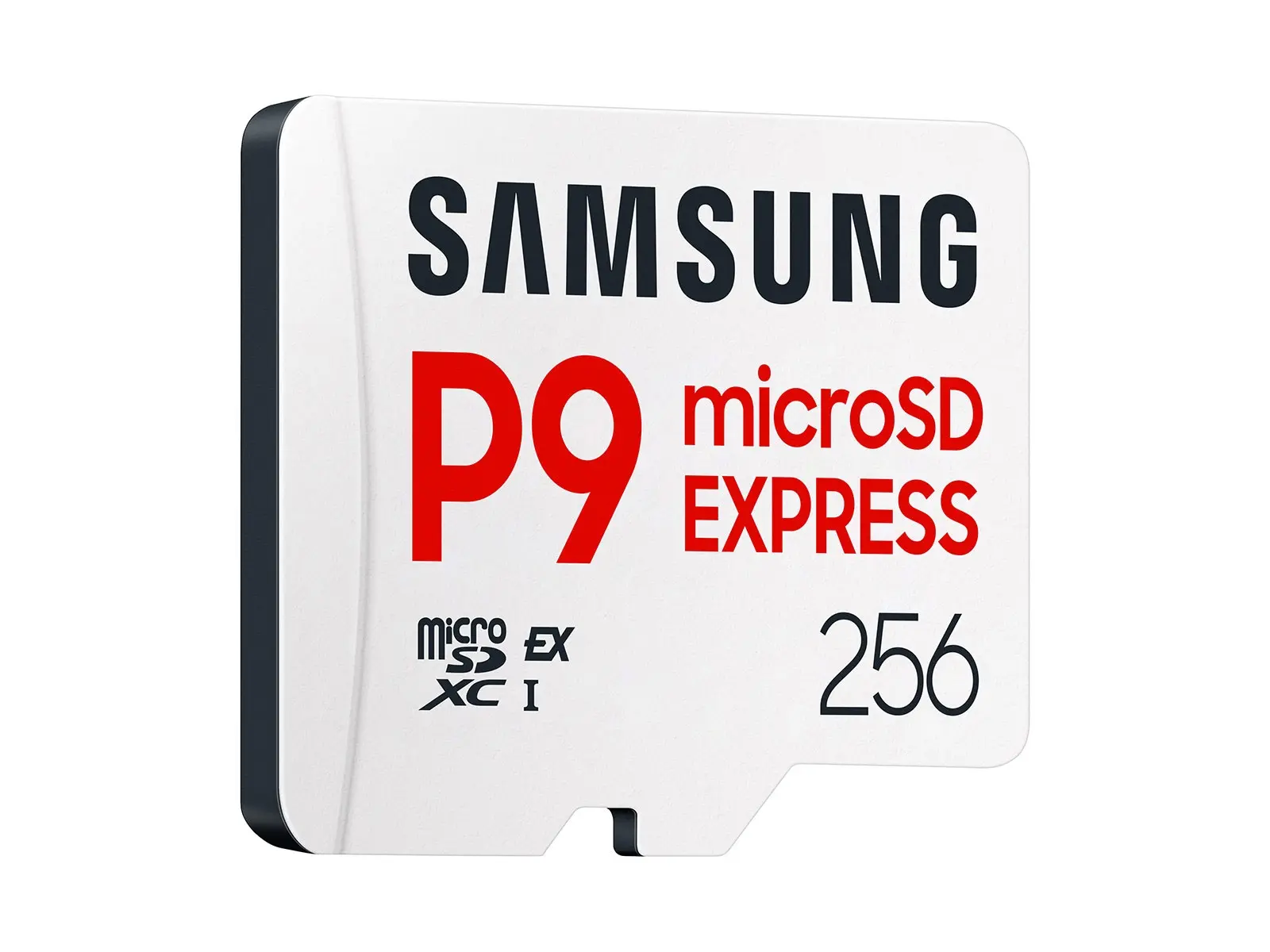
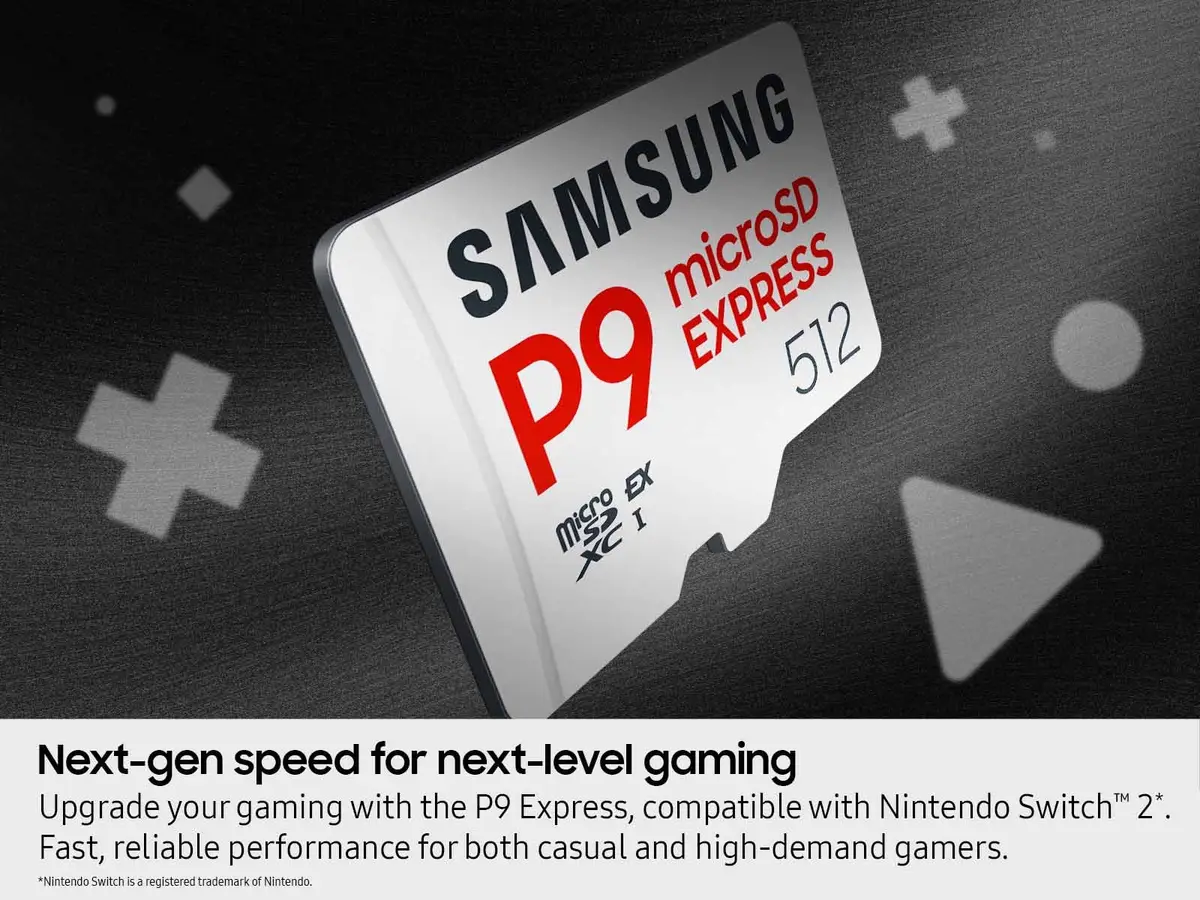
Samsung’s P9 Express is a microSD Express card line built to add storage to the Nintendo Switch 2, with sequential reads of up to 800MB/s and launch prices of $54.99 for 256GB and $99.99 for 512GB, according to Samsung. It is the company’s first microSD Express range.
Samsung Electronics America announced the cards on November 4, 2025, and said they were on sale at Samsung.com and select retailers. Here is what the cards do, what they cost and who needs one.
Why does the Switch 2 need a microSD Express card?
Because Nintendo says the console accepts only that card type. Its microSD Express Card FAQ states that Nintendo Switch 2 is only compatible with microSD Express cards, and that older microSD, microSDHC and microSDXC cards are not supported. Nintendo lists support for any microSD Express card up to 2 TB.
The card holds downloadable software, software update data, downloadable content, screenshots and captured videos. Game save data stays in system memory and cannot be copied to the card. Once a card is inserted it becomes the default save location for downloadable software. Nintendo recommends using a single card, because software spread across several cards cannot be merged later, and says you can copy everything to a larger card if you run out of room.
What are the P9 Express specs?
Samsung and Tom’s Hardware give these figures:
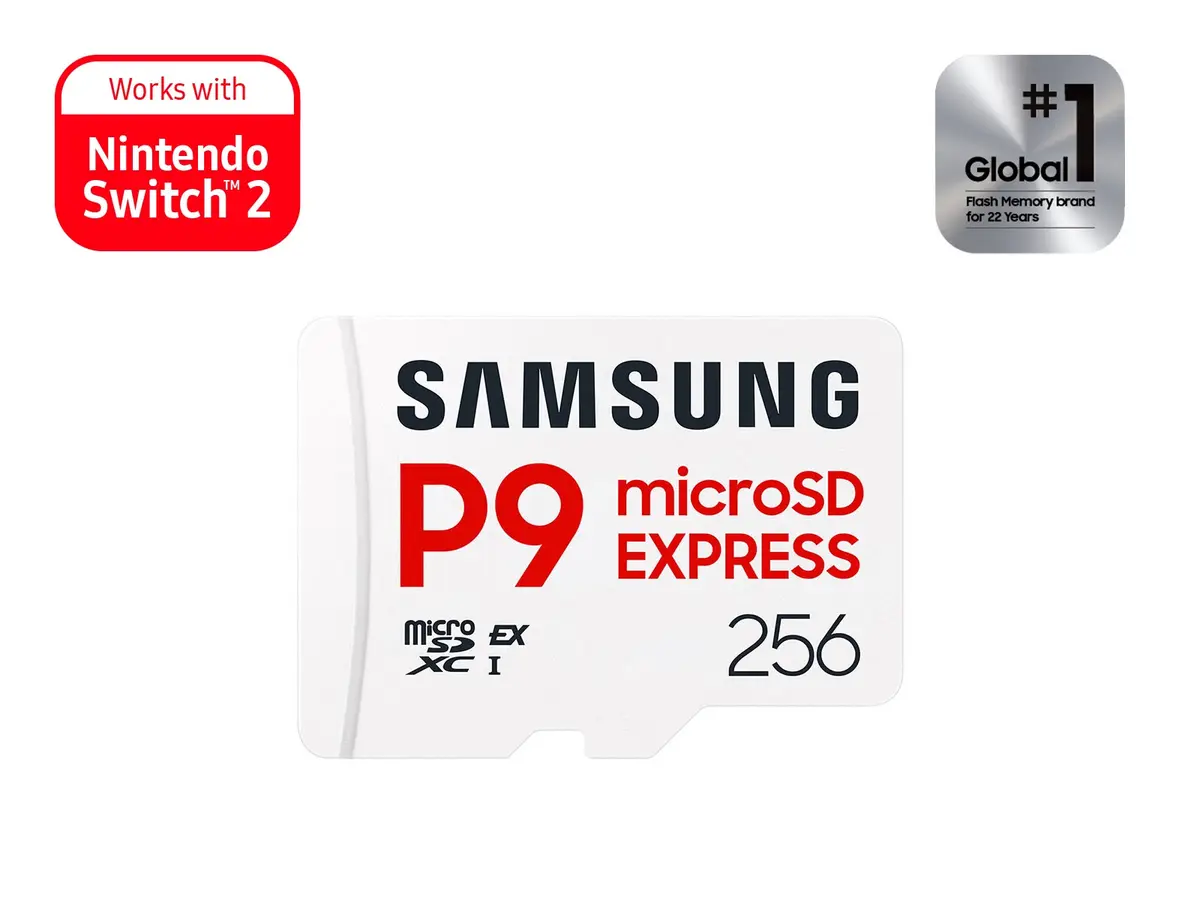
- Capacities: 256GB (model MB-MK256T) and 512GB (model MB-MK512T)
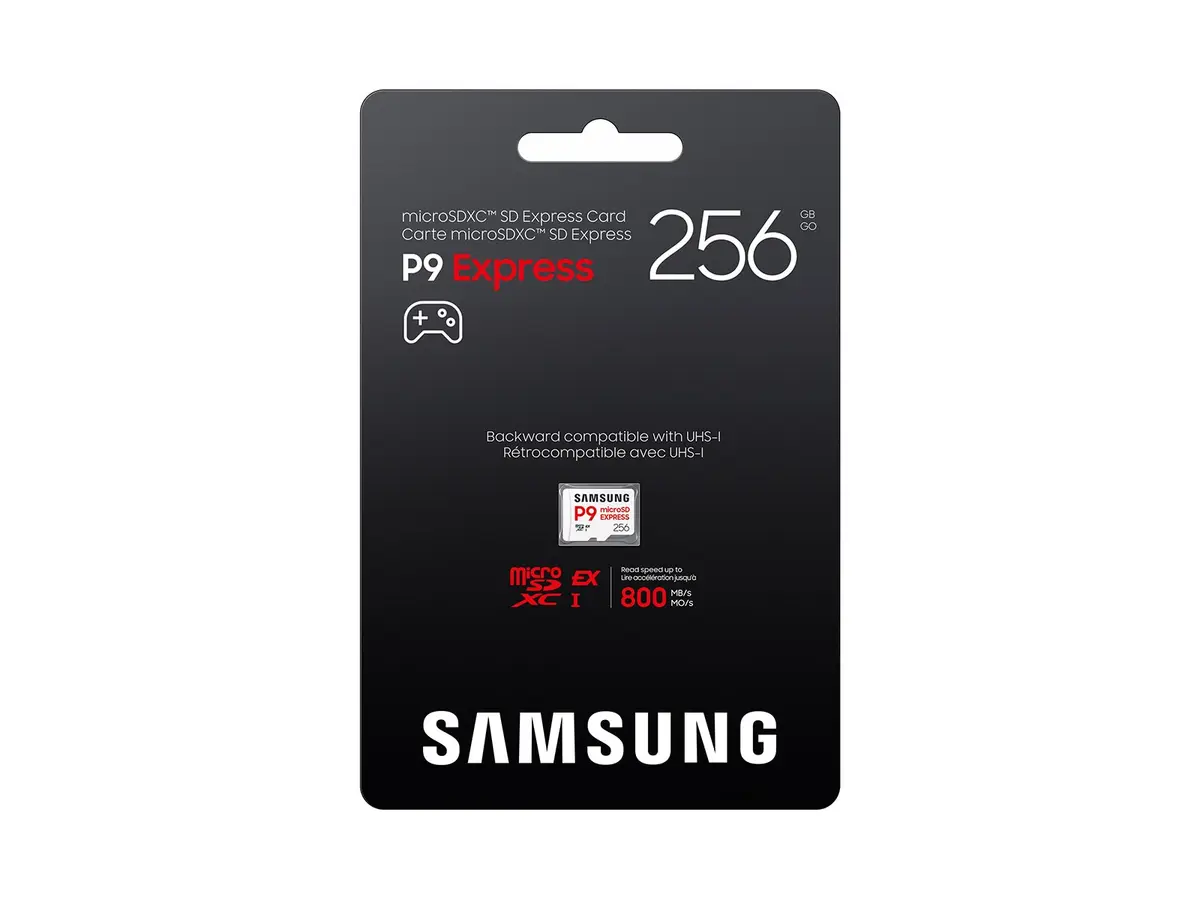
- Sequential reads: up to 800MB/s, which Samsung says is up to four times faster than standard UHS-I microSD cards
- Interface: PCIe 3.0 x1 with the NVMe protocol
- Random performance: 65,000 random read IOPS and 52,000 random write IOPS, according to Tom’s Hardware
- Heat control: Samsung’s Dynamic Thermal Guard, a technology first developed for its SSDs, plus Host Memory Buffer support
- Warranty: 3-Year Limited Warranty
Samsung also calls the card 6-proof. By its description it is rated for water immersion of up to 72 hours in seawater, X-ray exposure up to 100mGy, magnetic fields up to 15,000 gauss, drops of up to 16.4 feet (5 meters) and up to 10,000 swipes of wear. The operating range is -13°F to 185°F.
Samsung adds that actual speeds vary by host device, interface and usage conditions. In a device that cannot use the Express interface, Tom’s Hardware reports that speeds fall back to UHS-I levels, up to 90MB/s sequential reads and 2,000 IOPS. Samsung’s release and US product page list read speeds only, with no write speed.
Samsung Magician software, for Windows 10 and later and macOS High Sierra 10.13 and later, can verify that a card is genuine and monitor its health.
How much does it cost?
At launch, Samsung listed an MSRP of $54.99 for 256GB and $99.99 for 512GB, in US dollars. Tom’s Hardware reported the same figures and noted that Amazon was temporarily discounting the 512GB card to $94.99.
At the time of writing, Samsung’s US product page shows $79.99 for the 256GB card and $149.99 for the 512GB card. Prices can change at any time, and the sources give no prices for other countries, so check your own Amazon store and Samsung’s site for local pricing.
For context, Engadget’s guide, last updated December 26, 2025, listed MSRPs of $55 and $100 for the P9 Express in 256GB and 512GB. In the 256GB size it listed the Samsung microSD Express Card for Nintendo Switch 2 at $60, the Lexar Play Pro at $60, SanDisk at $78 and Walmart’s Onn at $47. Engadget’s advice was to buy whichever card is in stock at the lowest price for the capacity you want, since performance differences are small.
Who should buy it?
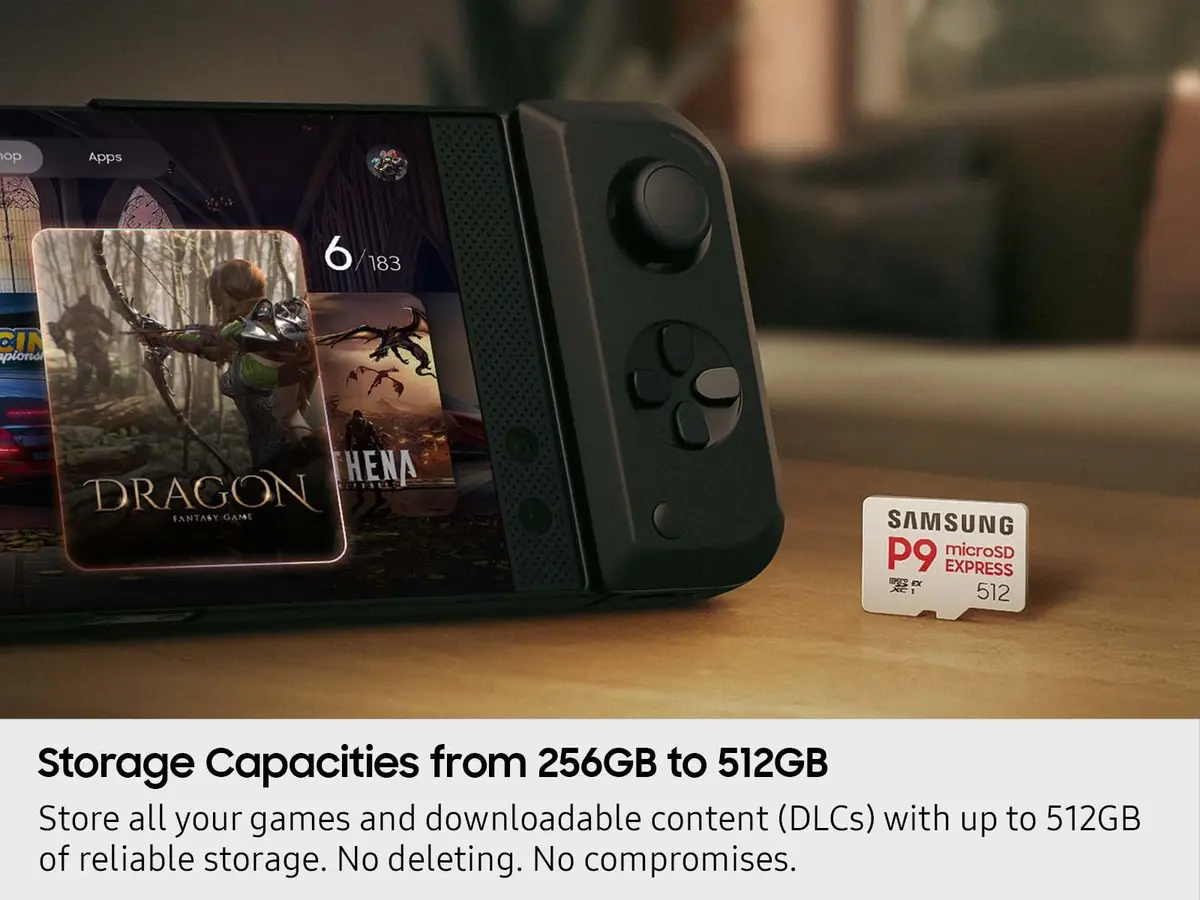
Switch 2 owners who buy digital games. Downloads, updates and DLC all land on the card, so anyone whose built-in storage is filling up is the obvious buyer. 256GB is the entry size, and 512GB suits larger libraries.
Players who capture a lot. Screenshots and videos can move between system memory and the card in both directions, so a card frees space without deleting clips.
Owners of other devices. Nintendo says microSD Express cards also work with Nintendo Switch, but Tom’s Hardware notes that on hardware without Express support the card is limited to UHS-I speeds, so the extra speed is mostly unused there.
Who should wait. If a rival card of the same capacity is cheaper in your store, Engadget’s view is that the performance gap is small. Compare the current price with the $54.99 launch figure before paying more.
What is still unknown?
Samsung lists no write speed for the P9 Express in its release or on its US page, and the sources do not explain why the current US listing differs from the launch price. Prices outside the United States were not stated.
Next step
Open Samsung’s US product page for the current price, then compare it with the same card on your Amazon store. Nintendo’s microSD Express Card FAQ lists the full rules for using the card.