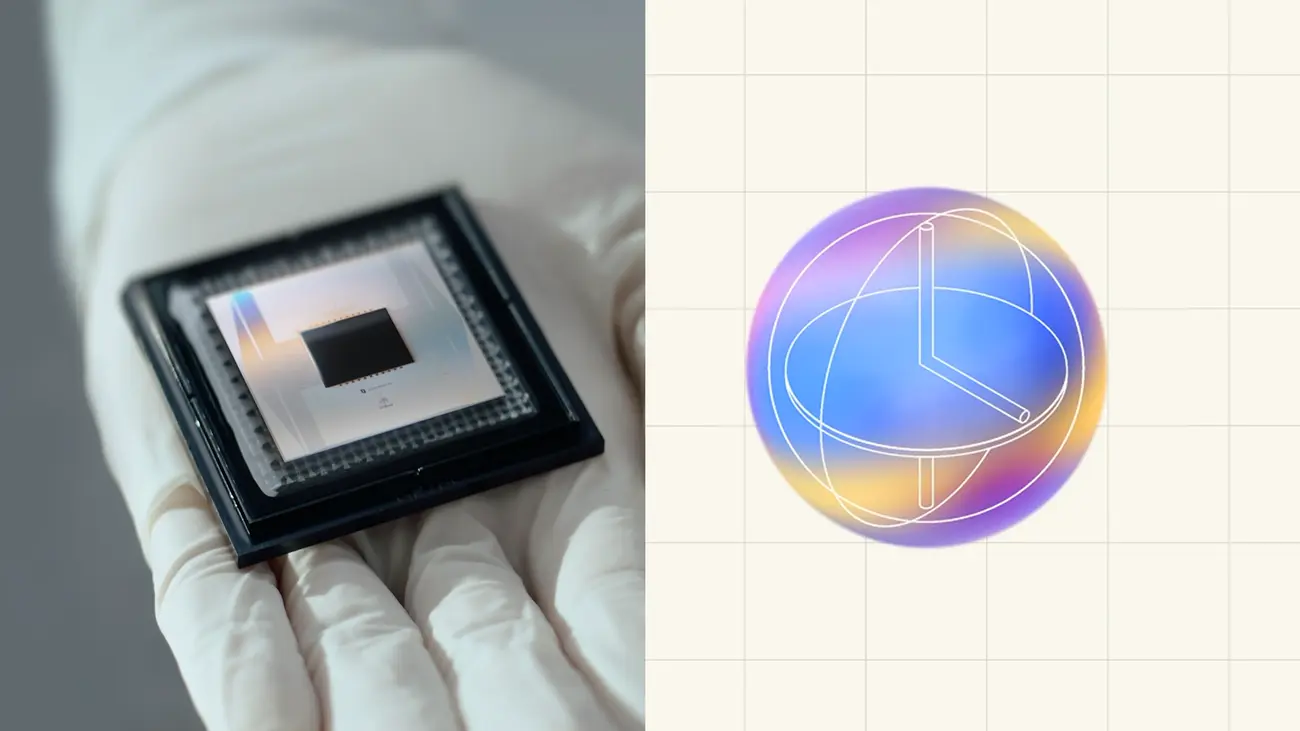

Google Quantum AI says it has shown, on real hardware, a way to make one of quantum computing’s most expensive ingredients far more cheaply. In a blog post dated October 15, 2026, the team reported that a method called magic state cultivation reduced errors about 40x on its Willow processor. The results were published in the journal Science.
What a magic state is
To run useful programs, a quantum computer needs a full set of operations, and some of those operations depend on special inputs known as magic states. Researchers have known since 2004 that making these states with low enough error would be a major bottleneck.
Google’s post explains why. Producing clean, error corrected magic states takes a lot of hardware, and some estimates suggested that up to 95% of a machine’s capacity could go to making them. Each magic state can also be used only once, so a computer needs a steady supply.
How cultivation works
The idea comes from a 2024 theory paper by Google researchers Craig Gidney, Noah Shutty and Cody Jones. Cultivation works like a filter. A noisy state is placed in a small patch of the chip, and a series of carefully timed checks throws away flawed attempts, leaving a very clean state that can then be moved into a larger, more protected encoding.
Getting it to work on hardware took time. Research scientist Emma Rosenfeld found that lab noise from drifting electrical equipment and temperature changes was skewing the team’s usual measurement method. The fix was extra control on the system and a new benchmark that uses cultivation to measure itself.
The results
According to Google, the protocol on Willow:
- cut errors about 40 times compared with states made without cultivation
- produced T states with a logical fidelity of 99.99%
- moved a purified state from a distance 3 color code into a distance 5 surface code, showing two error correction schemes can work together on the same chip
The research paper listed by Google Research adds that about 8% of attempts were kept after filtering.
What it means for you
This does not change any device you can buy today. Quantum computers that solve practical problems are still in the future, and Google says cultivation still has to be shown at a much larger scale, with plenty of technical challenges left. The value of this result is that it lowers the expected size and cost of a useful, error corrected machine. If that trend holds, quantum computers for tasks such as chemistry and materials research could arrive with fewer qubits than earlier estimates suggested.