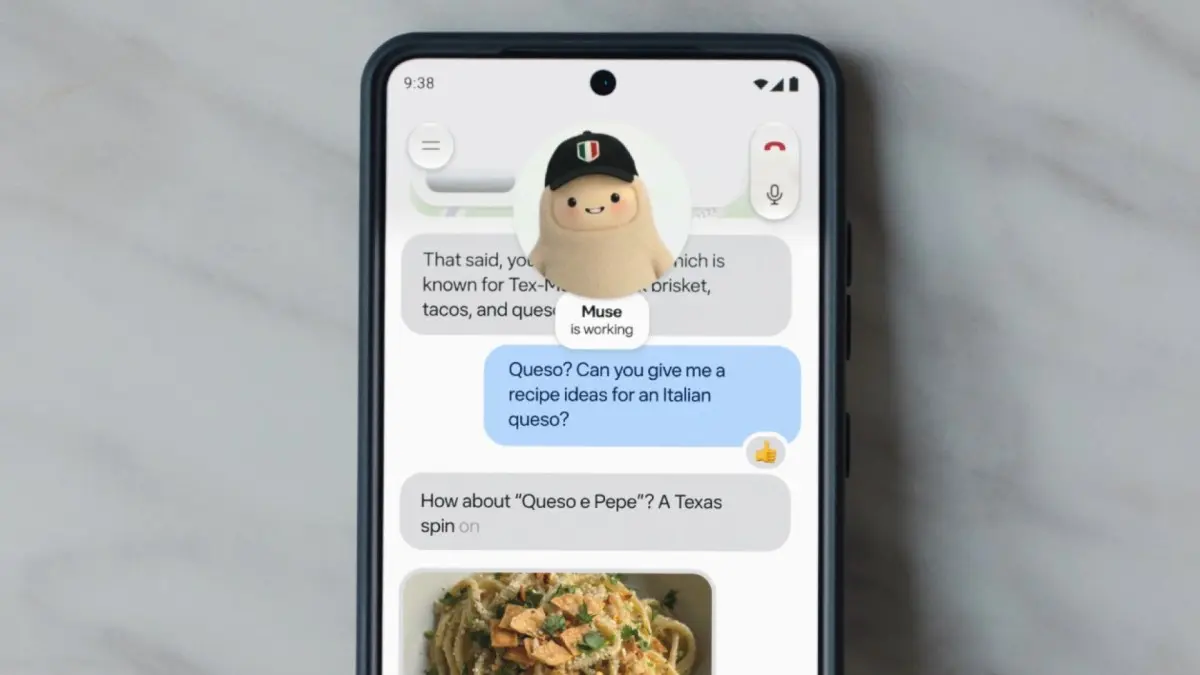
Meta has added real time voice conversations and expressive avatars to its Muse app, and US users on mobile, web and Mac can start one by tapping the phone icon in the top right corner. The company announced the rollout on November 5, 2026, and TechCrunch reported that it is open to everyone in the US.
Muse is Meta’s personal AI agent, and the update gives it a spoken, visual way to talk. Meta first previewed the feature at Connect 2026, and it is now live in the app.
What does Muse voice do?
Muse answers straight away with speech, and you can interrupt it mid sentence, the way you would with a person. Meta says the experience runs on two technologies, Muse Realtime Voice and Muse Realtime Avatar.
You choose how it looks on screen:
- Voice only
- An avatar beside the conversation
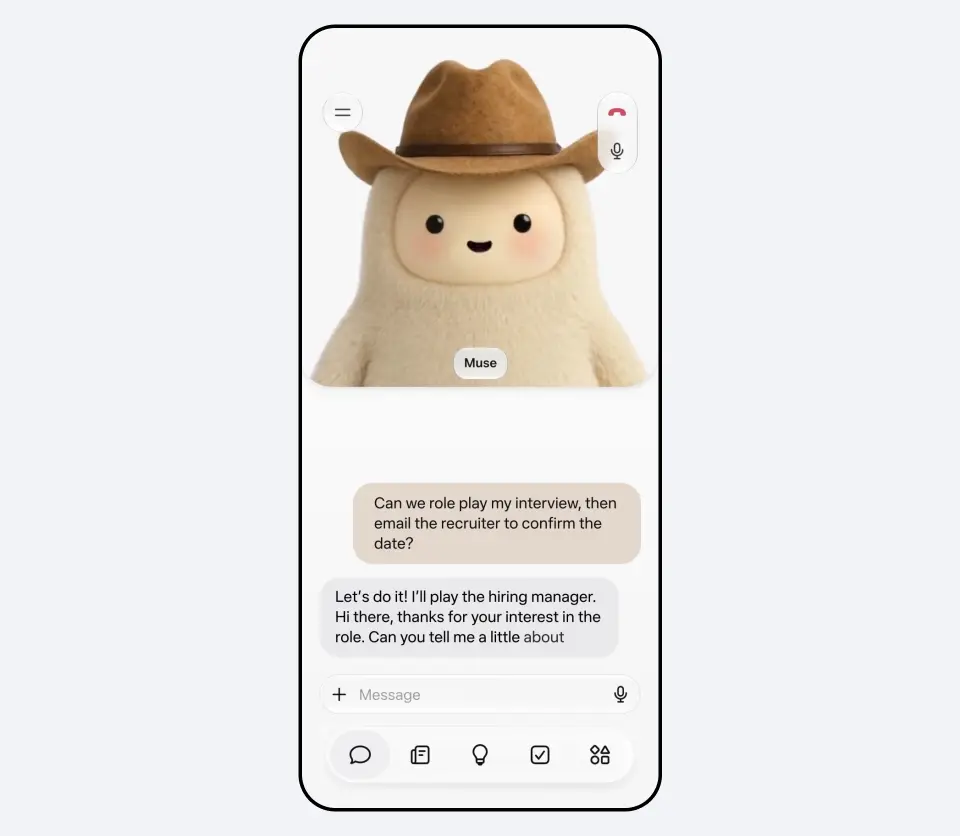
- A full screen avatar
Meta lists three everyday uses. You can talk through a half formed idea such as a trip while Muse works on it, rehearse a job interview, presentation or pitch and hear replies in the moment, or hand off a task while walking or when your hands are full. Muse carries on with delegated tasks in the background during the conversation, according to Meta.

How do the avatars and voices work?
The avatar reacts while you speak, which Meta says shows it is following along, and it uses subtle expressions and gestures that match the tone of the conversation. TechCrunch reports that the default avatar is an animated character nicknamed Jolly, and that users can change it to resemble a person, an animal or another character.
Muse does not see you. TechCrunch notes that it hears the user and responds to what is said, so the avatar is a face for the agent and not a camera feature.
Meta offers hundreds of voices, with examples such as a New York accent and a pirate style, and you can switch at any time. Unite.AI adds that Muse is for users 18 and older, and that Meta AI Research puts latency at about 870 ms from the end of your turn to the first byte of the response.
Where is it available, and what does it cost?
For now the rollout is in the US. Meta’s post says the features arrive on mobile, web and Mac, and TechCrunch reports they are open to all US users. Meta does not name other countries, languages or a date for them.
The post lists no price or subscription plan for voice conversations. If you are outside the US, check the Muse app and Meta’s newsroom for updates before expecting the phone icon.
Voice conversations are also planned for Meta’s AI Glasses and for Muse Charm, but Meta gave no timeline. TechCrunch adds that Meta plans to launch a Tamagotchi like wearable for Muse before the end of 2026, with the avatar on its small screen.
Who it suits
People who think out loud. If you plan trips or draft ideas by talking, a voice you can interrupt is faster than typing prompts.
Job seekers and presenters. Meta names interview, presentation and pitch practice as a use, so you can rehearse and hear responses straight away.
Busy people on the move. Handing off a task while walking is the hands free case Meta describes.
Who should wait. If you prefer text, if you are outside the US, or if you want privacy details before you talk to an agent, hold off. Meta’s post does not describe how voice conversations are handled.
What is still unknown?
Meta has not said which languages work, what voice chats cost, when other countries will get them or what privacy settings apply. Meta also notes that its research examples show model capability and do not all reflect avatars available in the app today.
Open the Muse app, tap the phone icon, and read Meta’s newsroom post for the details as the rollout expands.