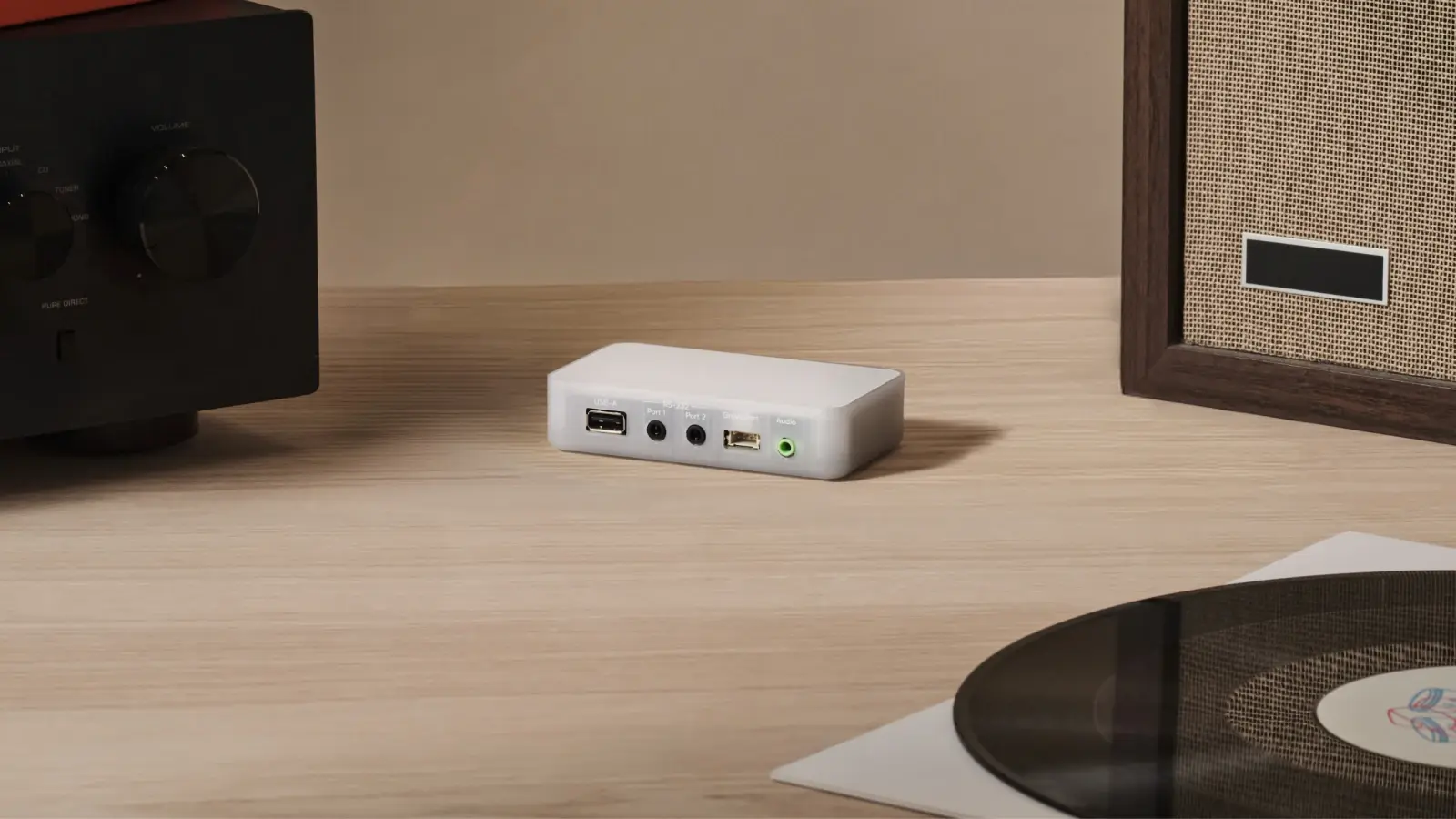
The Home Assistant Connect AUX-2 is a small box that adds audio streaming, serial control, a network link for a Z-Wave adapter and a Bluetooth hub to gear you already own, and it costs $69 / €59. Nabu Casa, the company that makes official Home Assistant hardware, launched it on November 11, 2026 and says it is available worldwide.
The pitch is to keep a working amplifier, solar inverter or TV rather than replace it. The Verge’s Nathan Edwards tested the box for a couple of days and found it “unsurprisingly useful and surprisingly easy to set up.”
What does the Connect AUX-2 include?
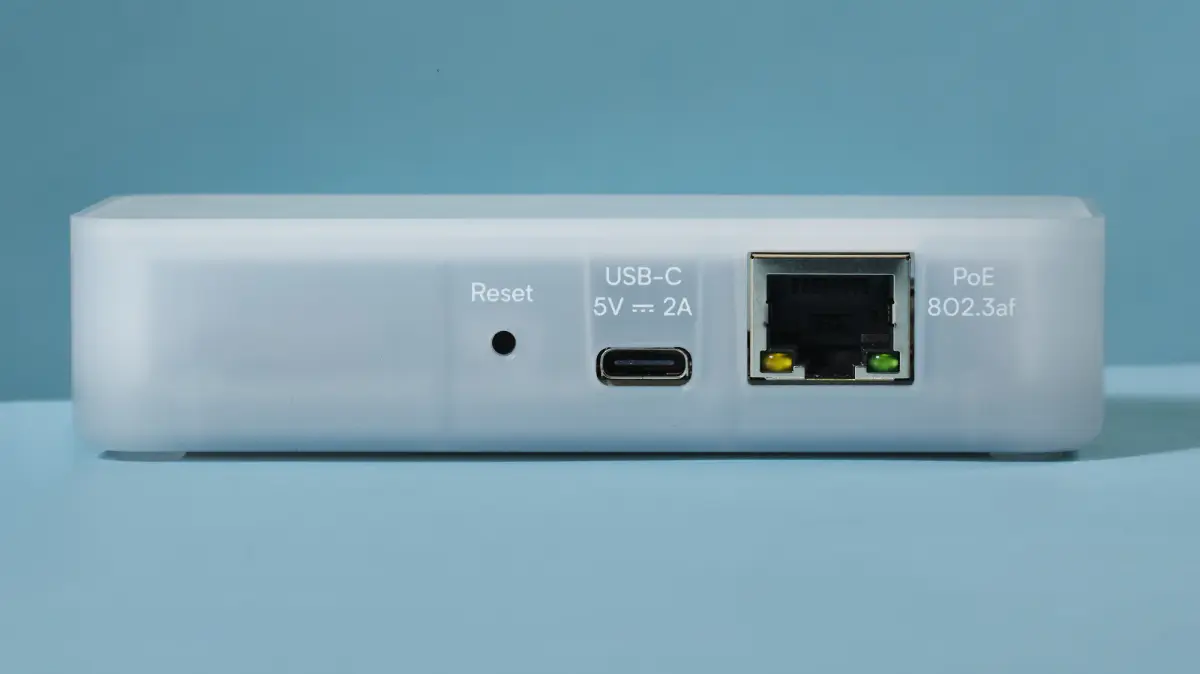
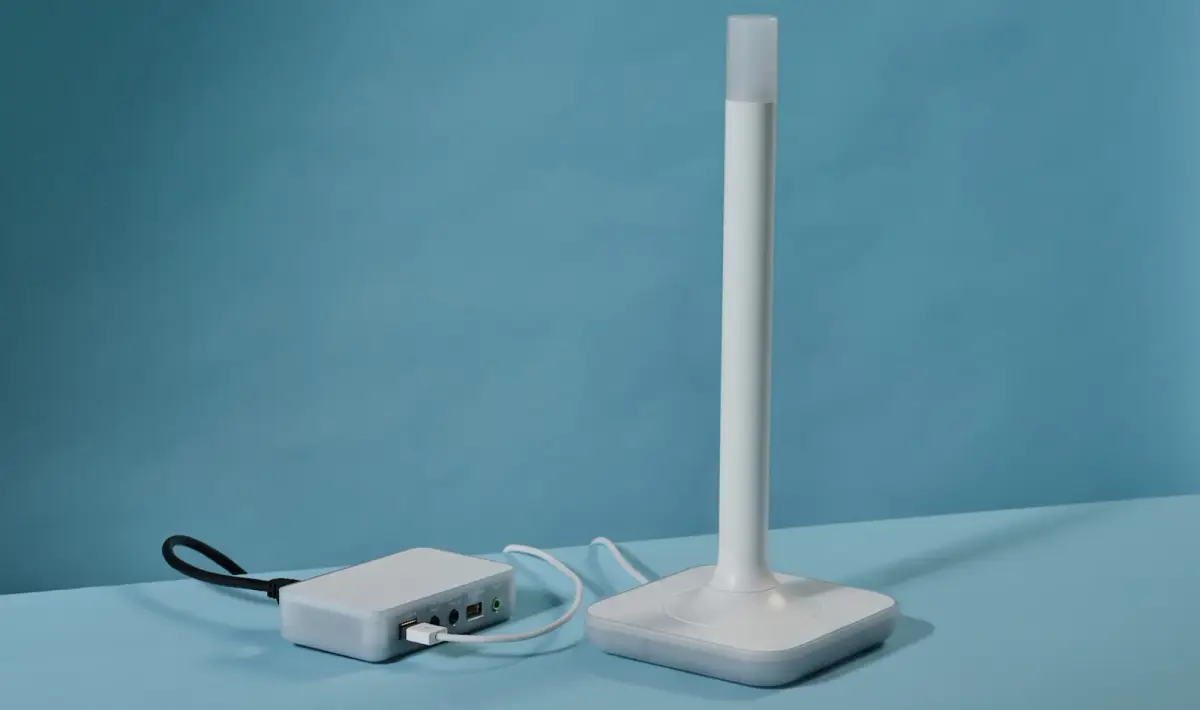
The Verge describes it as about the size of a deck of cards. Nabu Casa calls it a smart home multi-tool, and the port list explains why:
- Network: Ethernet with Power over Ethernet (PoE), or 2.4GHz Wi-Fi
- Power: USB-C or PoE, with a 5 V USB-C supply of 2 A or more, according to the product page
- Audio: one combined analog and digital jack
- Serial: two RS-232 ports on 3.5 mm connectors
- USB: for a Connect ZWA-2 or ZBT-2 adapter, or an RS-485 adapter
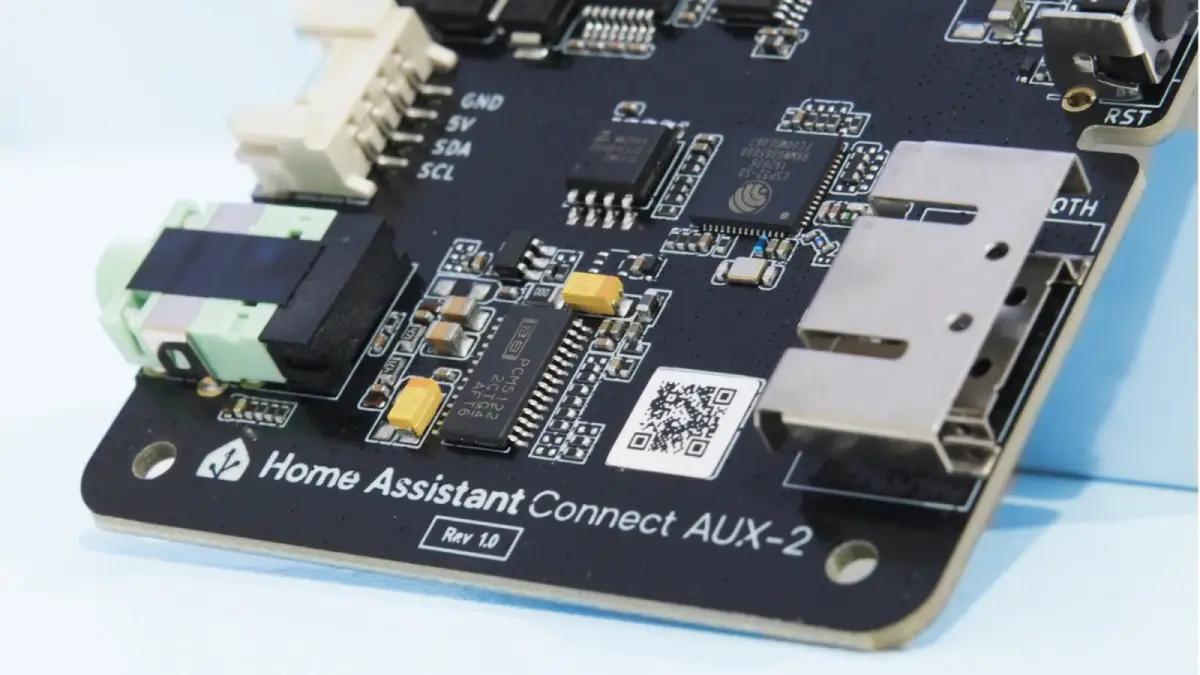
- Grove port: for sensors, plus a Bluetooth antenna built for the job
It is also open. Nabu Casa says it is fully unlocked for custom firmware, held together by four Phillips screws, and that it will release the PCB and 3D print files.
How does it bring old audio gear into a smart home?
It turns an amplifier with an optical digital input and a serial control port into a network speaker. Nabu Casa says the optical feed carries CD-quality sound, while serial lets Home Assistant change volume and source and switch power, even from standby.
Playback comes from Music Assistant, which uses the Sendspin protocol to sync audio across brands. You can group several AUX-2 units or pair them with a HomePod or a Sonos speaker. The box senses whether the cable is analog or digital and switches output on its own, and Nabu Casa says it never draws more than a watt or two.
What can serial control do?
Serial lets Home Assistant command equipment that has no useful app: TVs, AV receivers, solar inverters and climate gear. Nabu Casa gives the LG TV serial integration as one example, so the TV can stay off your network.
Some practical points from the company:
- Buy the right cable for your device and enable serial control in its settings if needed.
- A $15 RS-485 adapter on the USB port connects Modbus devices.
- A sticker covers the 3.5 mm serial ports so nobody mistakes them for audio.
- Switches on the bottom swap the RX and TX lines, so a cable with reversed wiring still works.
Does it work with Z-Wave, Zigbee, Thread and Bluetooth?
Z-Wave works: Nabu Casa says it has tested a Connect ZWA-2 over the AUX-2 for months. That lets you place the adapter anywhere with network access instead of beside a hub in a basement.
Zigbee with a Connect ZBT-2 works but is not advertised yet, because the company wants more testing. Thread does not work reliably over a network, so it is not supported. Nabu Casa recommends a wired connection, and says Wi-Fi can bring instability and, for Zigbee, more interference.
As a Bluetooth proxy it needs no flashing. Edwards used it to read Govee Bluetooth hygrometers in a garage fridge, and the signal held through three walls and a fridge, he wrote.
Prices
The recommended price is $69 in US dollars (excluding taxes) and €59 in euros (including applicable taxes), according to Nabu Casa. The company adds that prices differ between regions and retailers. No prices in other currencies are listed.
Extras are separate. The company mentions a $15 RS-485 adapter and a $5 sensor as examples, and serial cables depend on your device.
Who it suits
Home Assistant owners with a poorly placed hub. If your system sits in a basement or behind thick walls, the PoE option lets a Z-Wave adapter live in a better spot with a two-cable setup.
Owners of good older audio gear. An amplifier with optical input and serial control gets sync with modern speakers and a self-hosted FLAC library, without buying a new streamer.
People with serial or Modbus equipment. Solar inverters, AV receivers and some TVs gain local control, which can replace a weak vendor app.
Tinkerers. The unlocked firmware, Grove port and open hardware files suit people who want a Squeezelite or Snapcast streamer.
Anyone who only wants a Bluetooth hub or PoE for one adapter can use it for that and ignore the rest.
What is still unknown?
Nabu Casa has not yet shown Zigbee as an everyday feature, and Thread over the network has not been solved. Edwards’ hands-on covers a couple of days, so long-term reliability is untested. Prices outside US dollars and euros, and local retail availability, are not stated. For details, read the product page and the Home Assistant launch post, and check your own devices for serial or optical ports first.