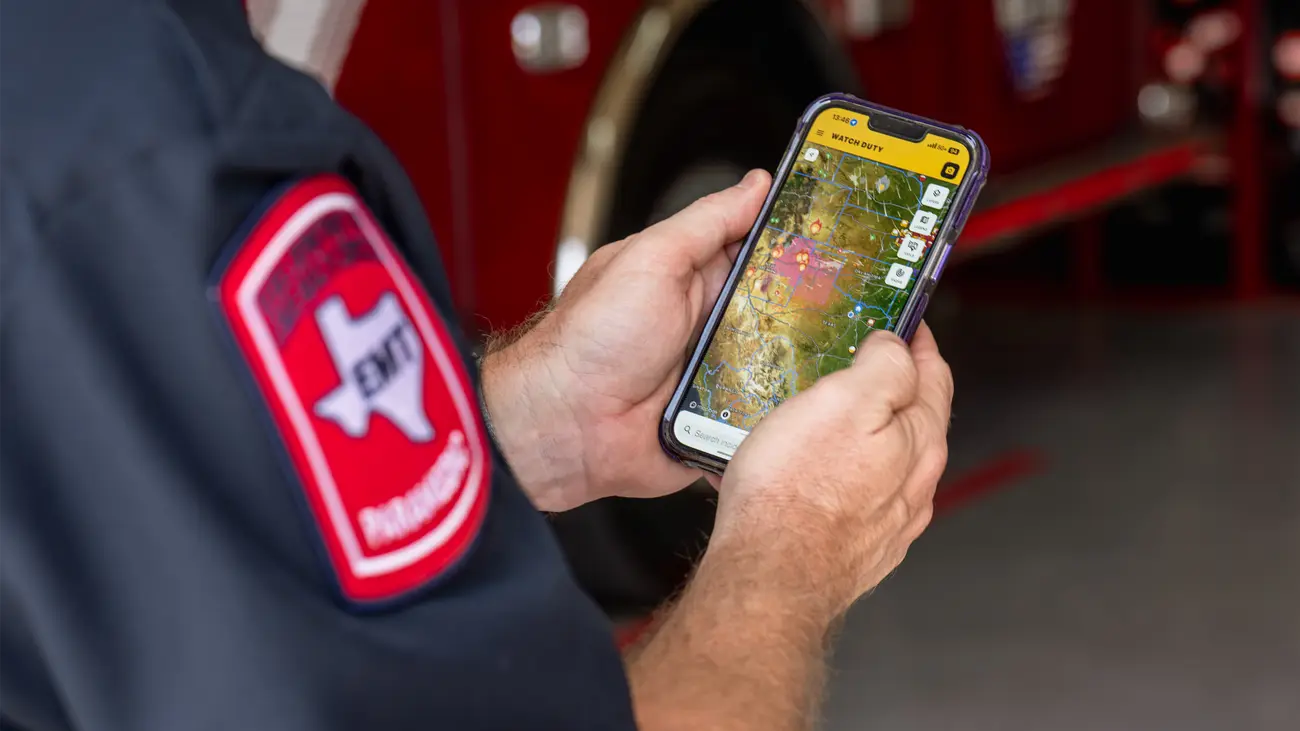
Watch Duty, the nonprofit wildfire alert app, now uses a Gemini-powered tool that turns noisy fire radio into text and signals its reporters to a new dispatch in under 30 seconds. Google described the project on Nov 20, 2026.
Google engineers and researchers spent six months embedded full time with Watch Duty through the Google.org Fellowship. They trained the system on more than 20,000 hours of past radio recordings, so it can clear heavy static and translate firefighting jargon into searchable text.
What problem does the tool solve?
In much of the country the first word of a new fire still travels over analog VHF radio, according to Google. Engine noise, wind, static and rapid tactical jargon make those transmissions hard to follow. Watch Duty is run by active and retired firefighters, dispatchers and first responders, and its reporters monitor up to 20 feeds by hand. Google says a new fire can be missed simply because nobody was listening at that moment.
Watch Duty says in its own April post that human verification stays in place. The tool is meant to support reporters, not replace them.
What numbers did Google report?
Google and Watch Duty gave these results across Watch Duty’s network:
| Measure | Result |
|---|---|
| Alert signal to reporters | Less than 30 seconds |
| Word error rate on degraded VHF audio | From 38% to 22.34% |
| Radio speech transcribed per day | More than 200 hours from about 400 active feeds |
| Designed and tested capacity | More than 10,000 feeds at once |
| Volunteer reporter satisfaction with radio transcription tools | From 35.3% to 92.3% |
Google adds that the tool has helped close coverage gaps in areas with no other automated dispatch detection.
How did it perform during the Railroad Fire?
In July 2026 the Railroad Fire ignited at night in Washington. According to Google, the first 911 dispatch went out over local fire radio, and the tool transcribed it from the noisy audio and flagged it in under 30 seconds.
That gave the team time to verify the fire and push a Critical Alert, a notification type that breaks through do-not-disturb mode in urgent situations. Google says residents were helped to evacuate before flames reached homes. It was the first time Watch Duty had sent a Critical Alert overnight.
What else has Google provided to Watch Duty?
Google describes the radio tool as the latest step in a multi-year collaboration across its philanthropic, product and research teams. Its list:
- Funding: In 2024, Google.org gave Watch Duty $2 million and $300,000 in Google Cloud credits to help compile satellite, camera and radio data to validate new fires.
- Search: During US fires including the Palisades, Eaton, Hurst and Auto fires, Google Search featured Watch Duty in SOS alerts alongside official emergency guidance.
- Alerts at scale: Watch Duty sends push alerts through Firebase Cloud Messaging. As its audience grew to more than 16 million people last year, Google Cloud raised its messaging limit from 600,000 to 1 million.
- Industry work: Watch Duty takes part in the AI Collaborative: Wildfires.
Watch Duty’s own April post also says it already uses Gemini to parse public information officer updates sent as email and PDF files, and to prioritize user-submitted photos that show smoke or fire.
Prices
Neither source lists a price for the radio transcription tool. Google describes it as built with pro bono support through the Google.org Fellowship and used within Watch Duty’s reporting work, so it is not a product readers buy. The sources do not state a price for the Watch Duty app itself, and Google’s post describes the work in terms of the US, with a goal of covering all 50 states.
Who it suits
Watch Duty users in the US. The tool works behind the scenes, so the visible effect is meant to be earlier verification and alerts for new fires. Google’s Railroad Fire example is one case, not a guarantee for every incident.
Volunteer reporters and dispatch monitors. The reported satisfaction jump, from 35.3% to 92.3%, suggests the tool lowers the strain of listening to degraded audio, according to Google and Watch Duty.
Emergency agencies and communities that follow wildfire data. Watch Duty’s place in the AI Collaborative: Wildfires points to tools aimed at agencies and responders, though the sources give no details on sharing this tool.
Readers outside the US. The sources describe US radio feeds and US fires only, so nothing here confirms a similar tool for other countries.
What is still unknown
The accuracy figures come from Google and Watch Duty, and the sources do not describe an outside test. The 200 hours and 400 feeds describe current use, while 10,000 feeds is a design and test target, not a reported live number. The sources also do not say whether other agencies will get the tool or how future alerts will change. For updates, read the original Google post and Watch Duty’s own blog.