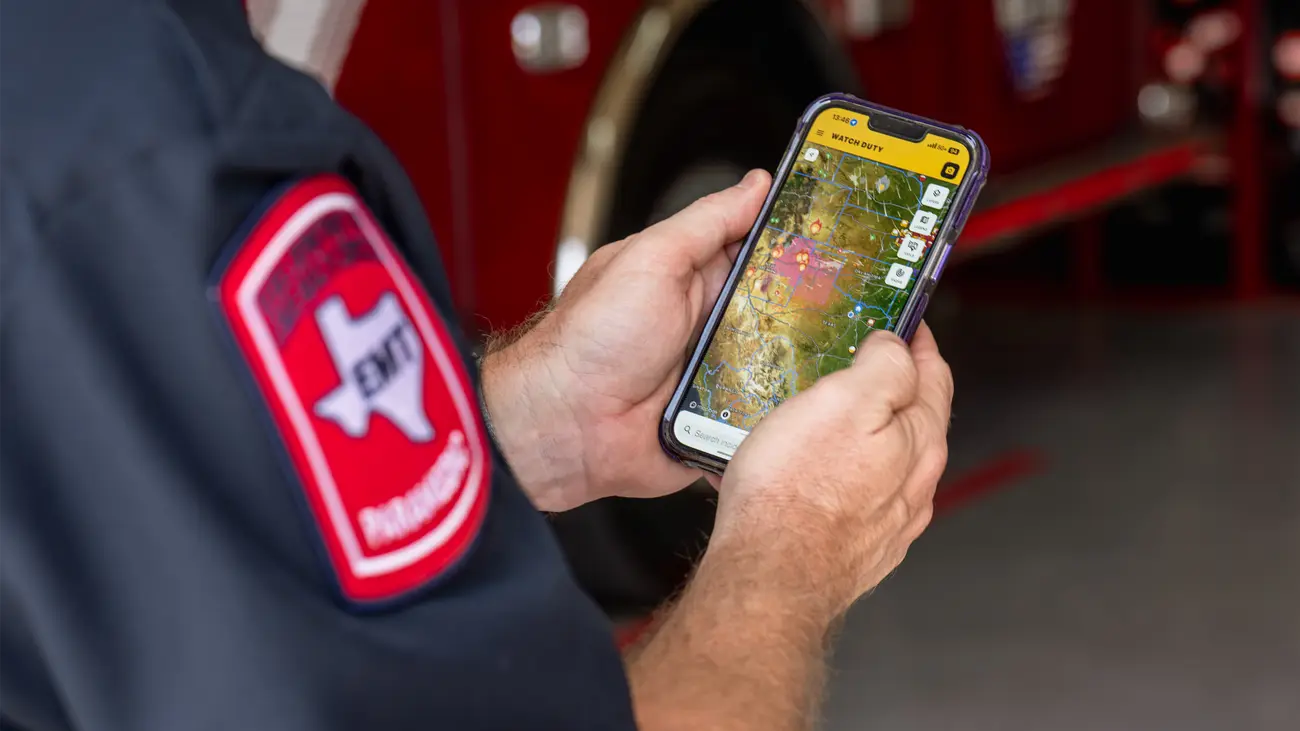
Watch Duty, the nonprofit wildfire alert app, now uses a Gemini-powered tool that turns noisy fire radio into searchable text and tells its reporters about a new dispatch in under 30 seconds. Google announced the results on November 20, 2026.
The tool was built by Google engineers and researchers who spent six months working full time inside Watch Duty through the Google.org Fellowship. Watch Duty is run by active and retired firefighters, dispatchers and first responders.
What problem does the tool solve?
The first word of a new fire still often travels over decades-old analog VHF radio, according to Google. Engine noise, wind, static and rapid tactical jargon make those calls hard to understand, and Watch Duty reporters monitor up to 20 feeds manually.
If nobody is listening to the right feed at the right moment, a new fire can be missed. The tool is meant to close that gap by listening on every feed at once.
How does it work?
The team used more than 20,000 hours of past radio recordings to build a Gemini-powered system. According to Google, it removes heavy static and translates specialized firefighting terminology into clean, searchable text.
Volunteers then spend less effort deciphering audio and more on verifying incidents and sending alerts. Watch Duty’s own post on the fellowship says the stated aim is to support human decision-making, not replace it.
What are the results?
Google lists these figures across Watch Duty’s network:
- Reporters get a signal in less than 30 seconds in areas with no other automated dispatch detection.
- Word error rate on degraded VHF radio audio fell from 38% to 22.34%.
- The tool transcribes more than 200 hours of radio speech a day from about 400 active feeds.
- It was designed and tested to handle more than 10,000 feeds at once.
- Volunteer reporter satisfaction with radio transcription tools rose from 35.3% to 92.3%.
A lower word error rate means fewer words are misheard, so a dispatcher’s address or fire name is more likely to come out right. Even at 22.34%, the figure shows the audio is still hard to transcribe, and a human reporter still verifies each incident.
What happened during the Railroad Fire?
In July 2026, the Railroad Fire spread through Washington overnight. When the first 911 dispatch went out over local fire radio, the tool transcribed it from the noisy audio and flagged it in under 30 seconds, Google says.
That gave the team time to verify the fire and push a Critical Alert, which breaks through do-not-disturb mode in urgent situations. Google says it was the first time Watch Duty had sent a Critical Alert overnight, and that it helped residents evacuate before flames reached homes.
What else has Google done with Watch Duty?
Google calls the radio tool the latest step in a multi-year collaboration across its philanthropic, product and research teams to help Watch Duty scale across all 50 states. In 2024, Google.org provided $2 million in funding and $300,000 in Google Cloud credits to help compile satellite, camera and radio data to validate new fires.
Watch Duty’s fellowship post also says it already uses Gemini to read Public Information Officer updates sent as email and PDF files, and to prioritize user photos that show smoke or fire.
Prices
No price is listed in the sources for the tool, which is an internal system used by Watch Duty’s reporters. The sources do not describe any charge for the app itself, so check Watch Duty’s own pages for how the app and its alerts are offered.
Who it suits
People who live in fire country. Faster detection means the team can verify and send an alert sooner, and Critical Alerts can break through do-not-disturb mode.
Volunteer reporters and dispatchers. The main change is less strain from listening to noisy audio, with more time for verification.
Local agencies and communities. Google says the tool helps close coverage gaps where no other automated dispatch detection exists.
Who should stay cautious. The figures come from Google and Watch Duty’s own reporting. The sources do not give an independent evaluation, and the Railroad Fire is one example, so treat the tool as a head start, not a guarantee.
What is still unknown?
Google does not say which regions the roughly 400 active feeds cover, how many missed fires the tool has caught, or when the system will reach the 10,000 feeds it was tested for. It also does not describe how alerts are tiered.
Next step
If you live in a fire-prone area, read Watch Duty’s own pages to see how its alerts work, and check your phone’s settings for Critical Alerts. Google’s full write-up is on The Keyword blog.