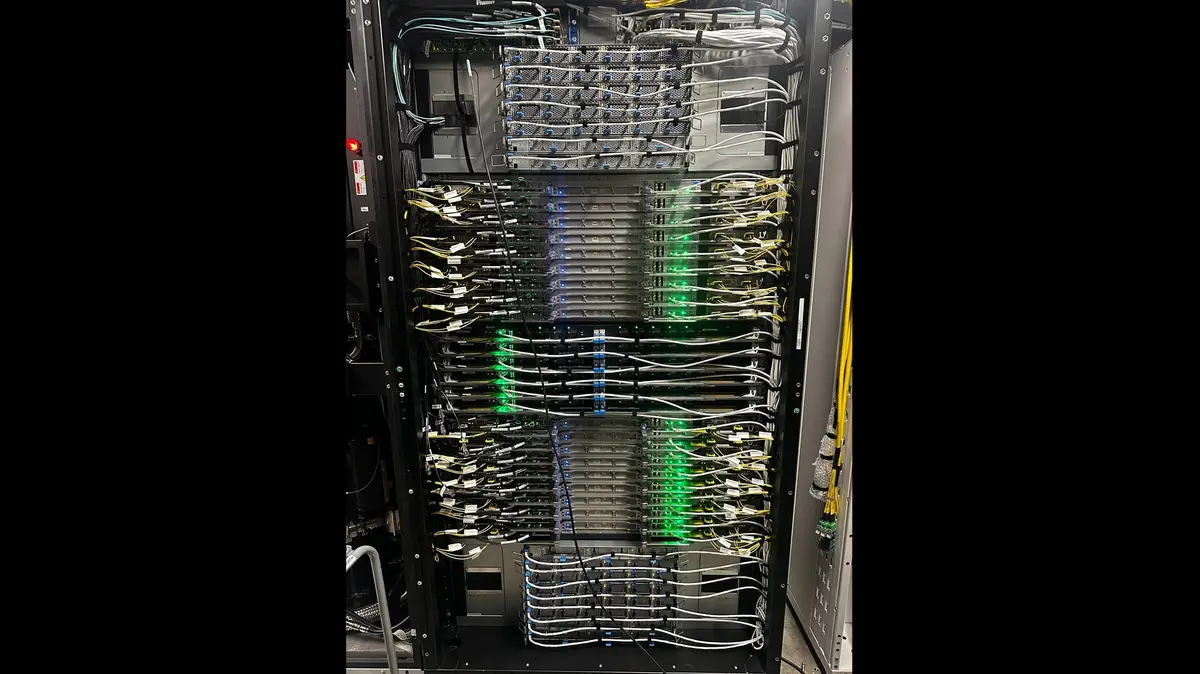
Microsoft has powered up its first AMD Helios rack-scale system at a research lab and says it is already running early AI workloads as part of validation testing, AMD said on November 23, 2026. It is a small but concrete step toward the at-scale Azure deployment the two companies announced in July.
Engineers from both companies are using the lab system to prepare the next Microsoft Azure rack-scale AI system. According to AMD, Microsoft accepted delivery this fall. The goal is AI inference on Helios across Azure, which means using trained models to answer questions and carry out tasks.
What did Microsoft and AMD announce?
AMD’s newsroom post says Microsoft powered up its first Helios rackscale solution at one of its research labs. Microsoft reports that the system is successfully performing early workloads during validation testing. AMD adds that Azure plans to deploy Helios at scale to support frontier models and customer applications, and that Azure is expected to be among the first cloud providers to put a Helios system to work on inference.
The lab rack follows the partnership expansion AMD announced on July 20, 2026. In that release Microsoft committed to deploy Helios for frontier model inference, and AMD said it would begin shipping Helios to customers, Microsoft included, in the second half of 2026.
What is inside an AMD Helios rack?
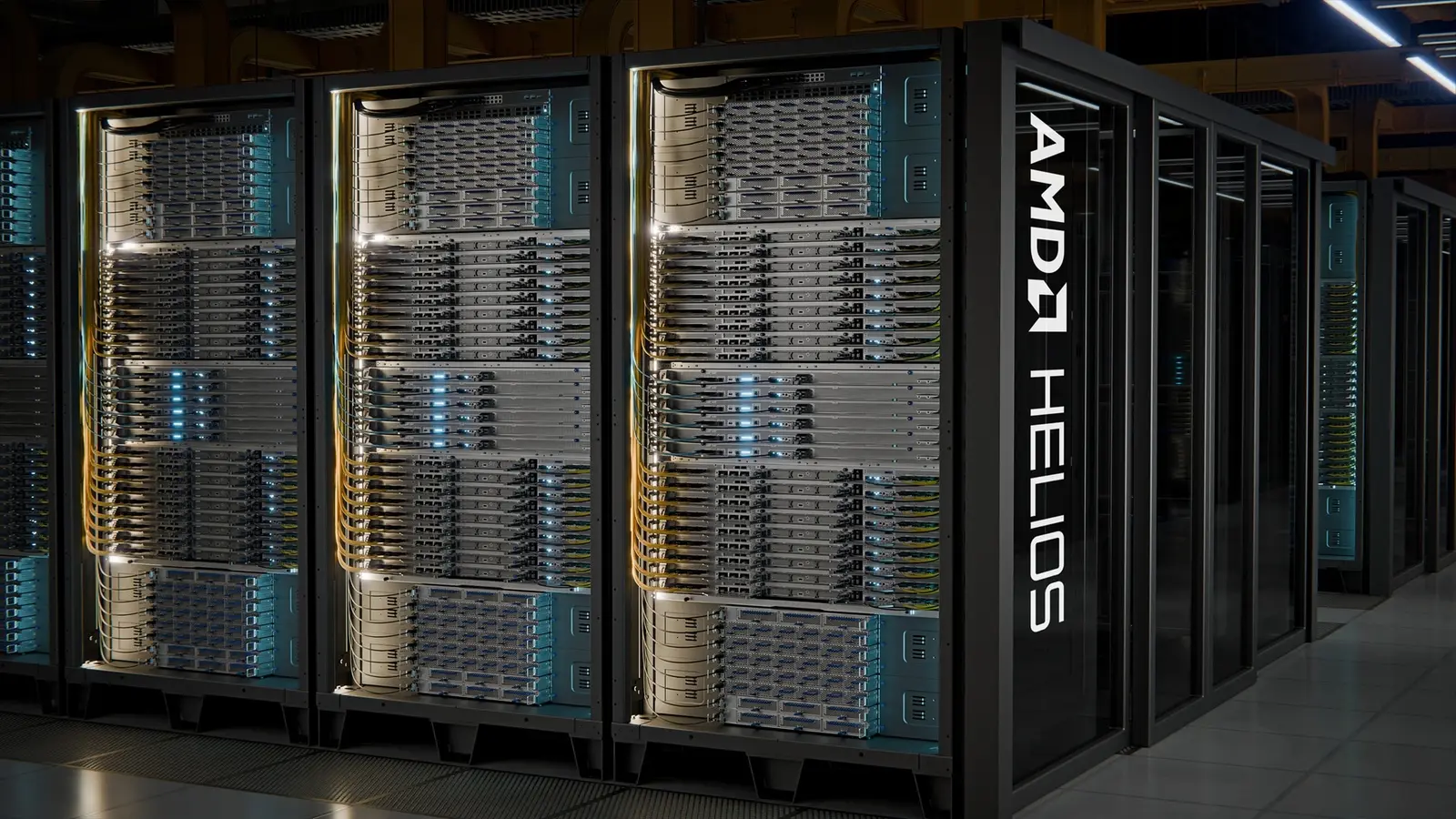
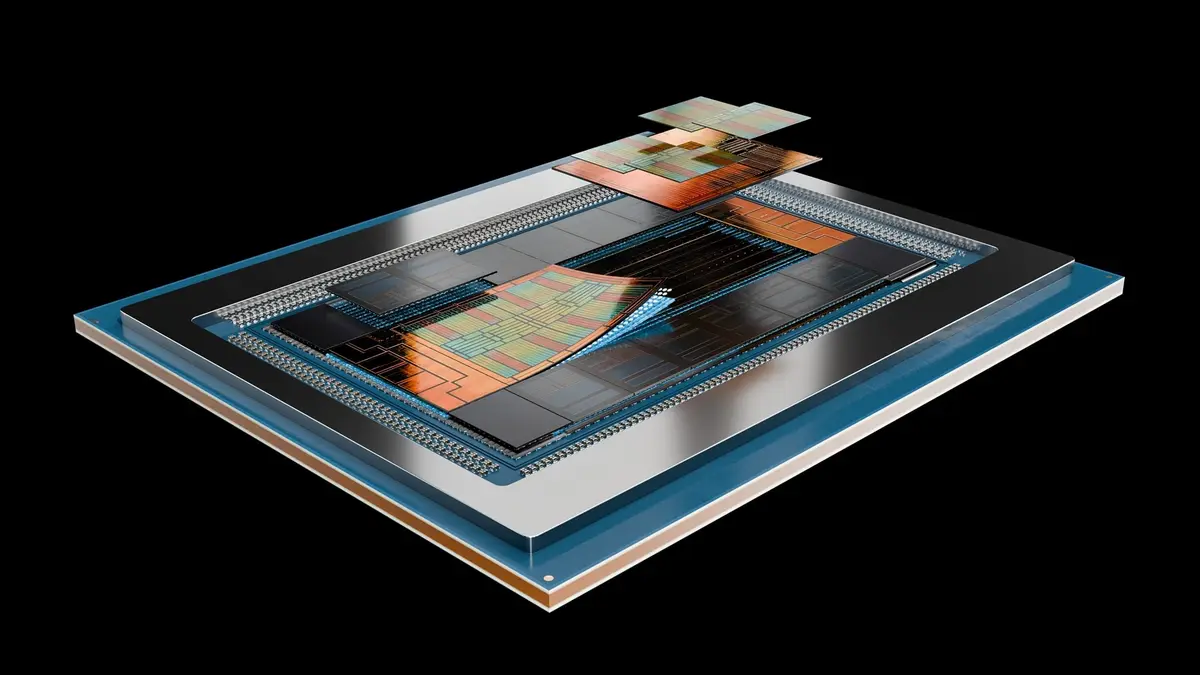
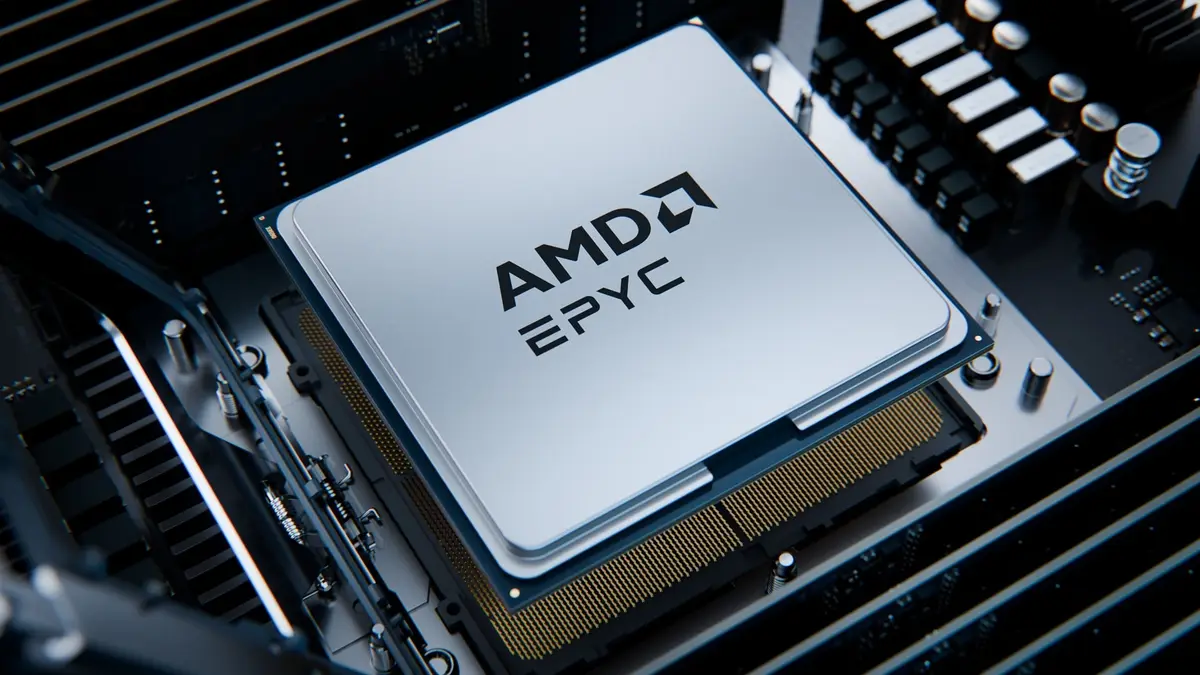
Helios is AMD’s integrated rack-scale AI platform. It combines Instinct MI455X GPUs, 6th Gen EPYC server CPUs, Pensando networking and ROCm software. AMD’s product page lists these figures for the full rack:
- 72 Instinct MI455X or MI450X GPUs
- 2.9 EF of FP4 compute and 1.4 EF of FP8 compute
- Up to 31 TB of HBM4 memory
- 260 TB/s of scale-up bandwidth and 43 TB/s of scale-out bandwidth
- EPYC “Venice” CPUs with up to 256 cores
In practice, one rack is meant to behave like a single very large AI machine: dozens of GPUs share memory and fast links. AMD says the big memory pool is there to let larger models and context windows run on the rack. These are AMD’s own design figures, and the company says the rack is built on open standards, including OCP Open Rack Wide, UALink and Ultra Ethernet.
How does Azure plan to use it?
As AMD describes the plan, Helios will handle inference for frontier models, Azure AI services and customer applications. In July the companies also said frontier model builders could use AMD-powered Azure infrastructure to train and serve large models, while enterprise customers could run production AI workloads through Azure Foundry Managed Compute.
The July announcement added two new Azure virtual machine series built on 6th Gen EPYC “Venice” processors: Azure HDv2, for agentic AI and data pipelines, and Azure HXv2, for semiconductor design. ITPro also reported that Microsoft’s own post named an ND MI455X v7 series, which Microsoft describes as designed for the reasoning, search and agentic workloads behind modern AI services.
How much does it cost?
No price is listed for Helios or for Azure capacity running on it. AMD and Microsoft have not published rack prices, rental rates or the size of the deployment. Tom’s Hardware noted in July that the companies did not state the size of Microsoft’s Helios deployment in watts or dollars. Anyone planning to rent capacity should watch Azure’s own pricing pages, because neither company has published rates.
Who should care?
AI developers and model builders. If you train or serve large models on Azure, Helios adds an AMD option next to the choices you already have. Nothing is open for booking yet.
Enterprise IT teams. Teams that run AI workloads through Foundry Managed Compute should watch which virtual machine series arrive first. AMD positions the rack for inference at scale.
Chip and data center watchers. Tom’s Hardware framed Helios as AMD’s answer to Nvidia’s Vera Rubin NVL72, so a working Azure rack is a data point worth following.
Who should wait. Anyone who needs firm dates, prices or benchmarks. Neither company has published a customer launch date for Helios-based Azure services, and the performance numbers above come from AMD.
What is still unknown?
Neither company has said when customers can use Helios on Azure, how many racks Microsoft will deploy or which regions come first. AMD says early workloads are running but has not published results from the lab system. The figures above are design specifications, not measured Azure results.
For the details, read AMD’s November 23 post and the Helios product page, then watch Azure’s announcements for the first Helios-based virtual machines.