Microsoft Discovery, the company’s AI platform for science and engineering, is built to keep what it learns from failed experiments, and a Microsoft post published on November 19, 2026 shows what that looks like in two research projects. In one, researchers found a datacenter cooling candidate in approximately 200 hours. In the other, a battery search recovered after a round in which nothing worked.
Microsoft calls Discovery a purpose-built platform that connects decades of research, reasons through complex problems, runs simulations and helps researchers decide where to go next. The post, written by a Microsoft team member on the Microsoft Discovery blog, lists three things to know about it.
How does Discovery go beyond a first guess?
It treats a hypothesis as the start of an investigation, not the result. Microsoft says Discovery Engine moves beyond one-shot answers and builds on evidence over time, combining AI reasoning, specialised tools and high-performance computing (HPC) while experts stay in control of where the work goes.
The example is a coolant. Microsoft researchers used Discovery to identify a novel immersion-cooling prototype for datacenters in approximately 200 hours, pairing AI models with HPC simulations. A prototype was tested in a PC and kept a stable temperature without fans.
Microsoft is careful to say it was not a production-validated coolant, only a promising candidate backed by computational evidence. PCWorld reported on an earlier version of this work at Build 2025, when Microsoft said it had used Discovery to develop an immersion fluid without PFAS and then ran a motherboard in it.
Why does Microsoft say memory matters?
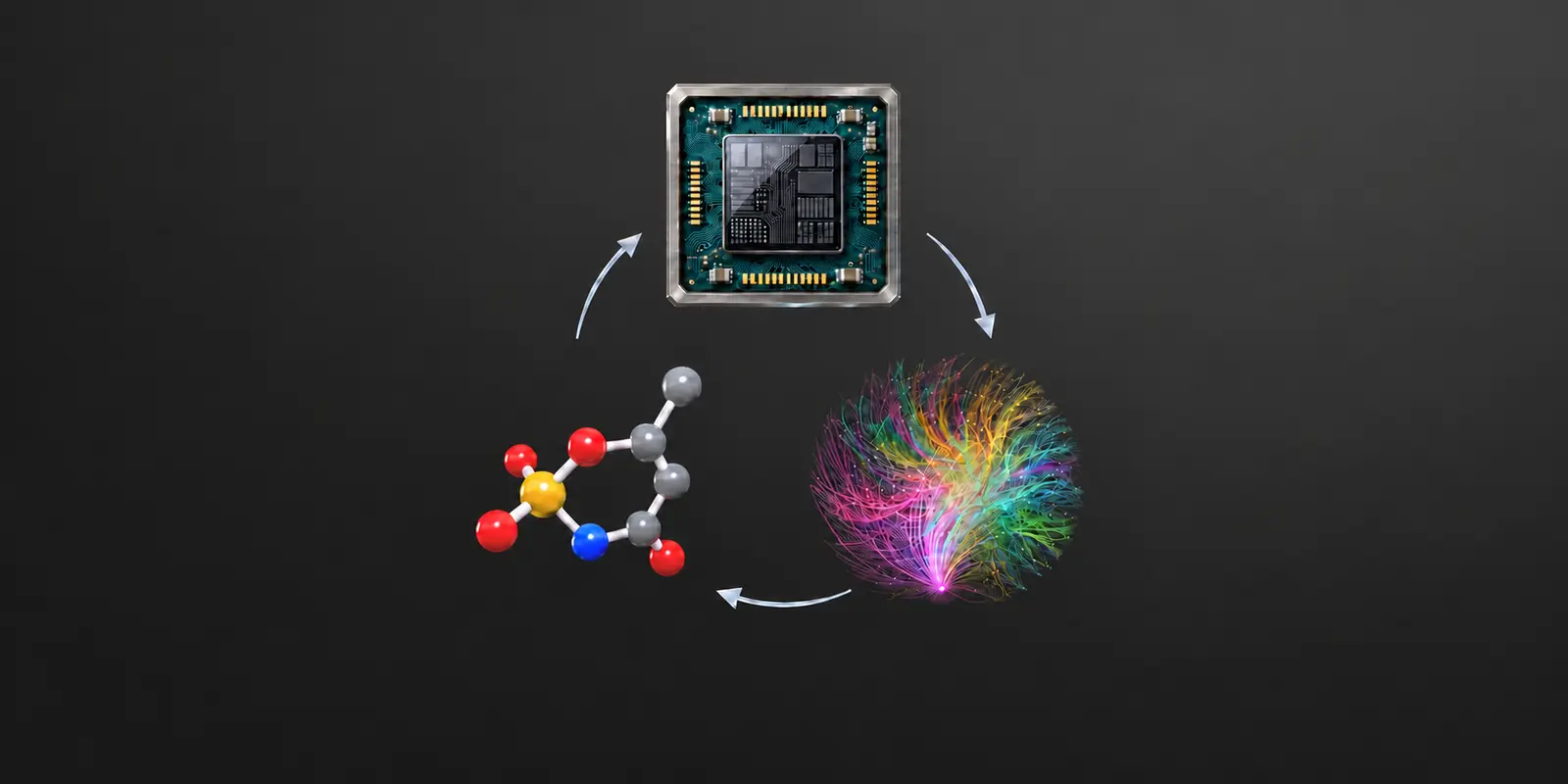
Because failed experiments carry information that normally disappears into notebooks and abandoned hypotheses. Discovery Bookshelf organises public, proprietary and organisational knowledge into a knowledge graph, so the platform keeps the reasoning and evidence behind a result, not just the result.
The flow battery project shows the idea in numbers. Microsoft worked with Yale Engineering, Canam Bioresearch and Pacific Northwest National Laboratory on organic redox flow batteries. Over several rounds Discovery explored multiple molecular designs.
- In one round, none of the parallel explorations produced a viable candidate.
- In another, four of six explorations produced candidates worth pursuing.
- After noting the limits of its own predictive tools, Discovery adapted, and in the next round four of six explorations succeeded.
Yale Engineering described a related study in June 2026. Researchers in David Kwabi’s lab used Microsoft’s CLIO approach, short for cognitive loop via in-situ optimization, to design molecules for aqueous organic redox flow batteries. The first suggestion from the benzocinnoline family performed well in some ways but released stored energy inefficiently. After the team returned lab data, CLIO proposed an altered molecule that worked. Kwabi said this signals “a huge potential for making lots of progress in the future.”
What can scientists do with the molecules?
The app lets users work with a structure directly. Microsoft shows acesulfame in 3D beside an editable 2D structure, so a researcher can inspect a molecule, change it and carry the change into the investigation. The company says working with outputs, not only reading them, is the bar it holds itself to.
Prices
Microsoft’s post lists no price, licence terms or plans for Microsoft Discovery. It does not say in which countries it is available or how a team signs up. Anyone interested should contact Microsoft or check its Microsoft Discovery pages for access details.
Who it suits
Chemistry and materials teams. The battery example involves repeated rounds of candidate molecules, which is where a record of past failures could save time on a long search.
Engineering groups with simulation budgets. The cooling work combined AI models with HPC simulations, so Discovery is aimed at teams that already run heavy computation.
R&D leaders. The case for the platform rests on keeping knowledge across projects, which matters when people move on and notebooks pile up.
Who should wait. Readers who need independent proof, pricing or a clear sign-up path. The figures come from Microsoft’s own post and a university write-up of one study, and the coolant is a prototype, not a product.
What is still unknown
The post does not say how many organisations use Discovery, what it costs, or how the results will be validated beyond the prototype stage. It also gives no numbers for the Discovery Engine on other projects.
For the next step, read the Microsoft Discovery blog post and the Yale Engineering write-up if you want the original details before judging the claims.