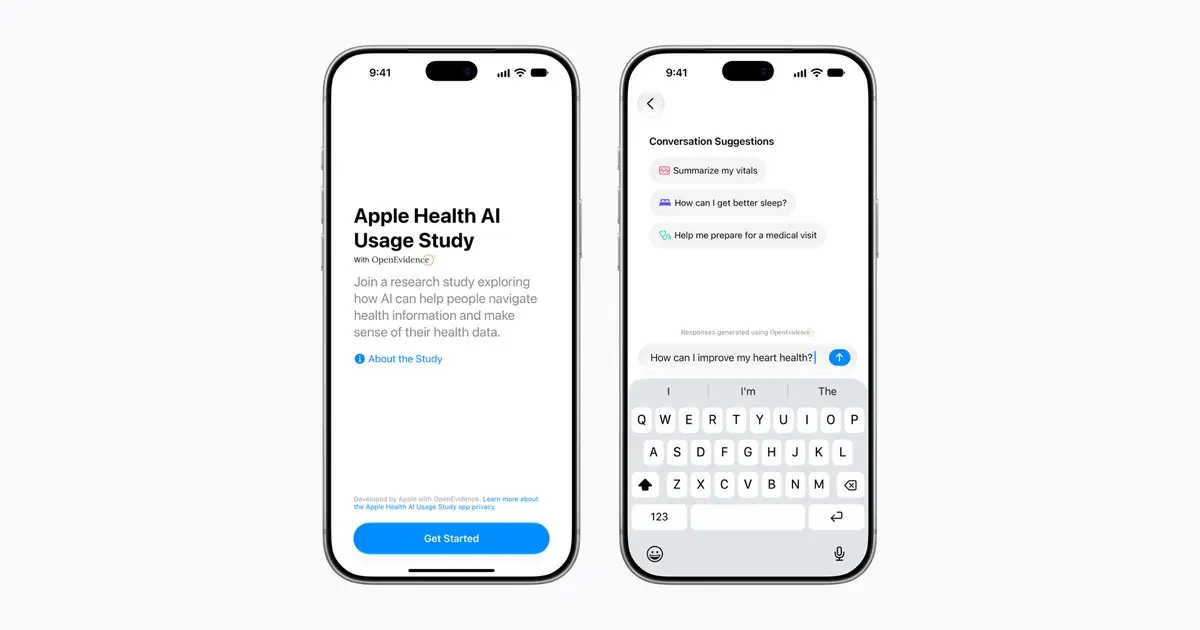
Apple’s redesigned Health app is in the iOS 27.3 developer beta, and Apple says it will reach users as a free software update later this year, but only on iPhone and iPad models that support Apple Intelligence. If your device is older or you keep Apple Intelligence switched off, the old Health app is what you should expect to keep.
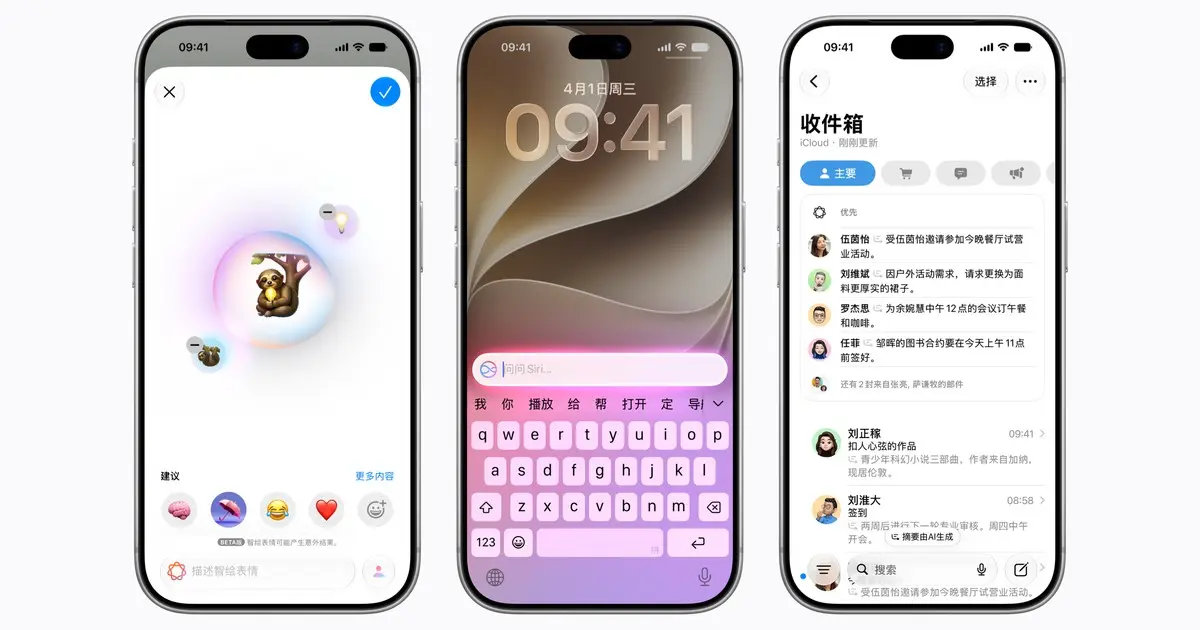
Apple announced the beta and an expansion of language support on its newsroom on November 3, 2026. The app now covers global English, Chinese (Simplified and Traditional), French, Japanese, Korean, Norwegian, Portuguese, Spanish, Turkish and Vietnamese. MacRumors reported that Apple tested the redesign in the iOS 27.2 beta but pulled it before iOS 27.2 shipped, and that iOS 27.3 brings it back.
What is new in the Health app?
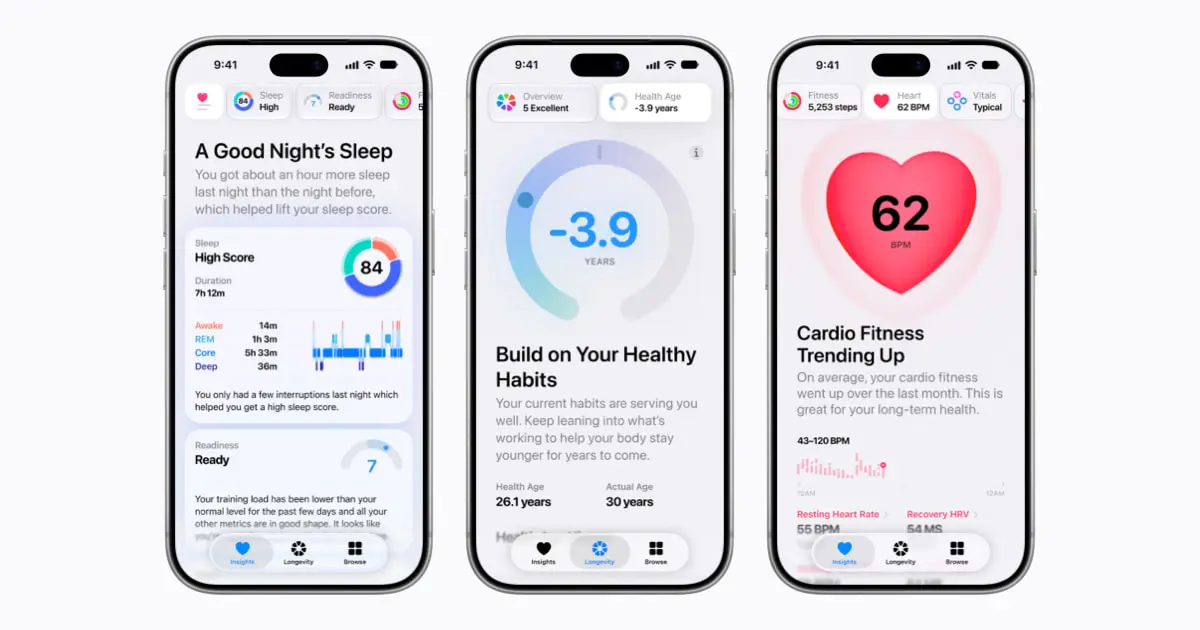
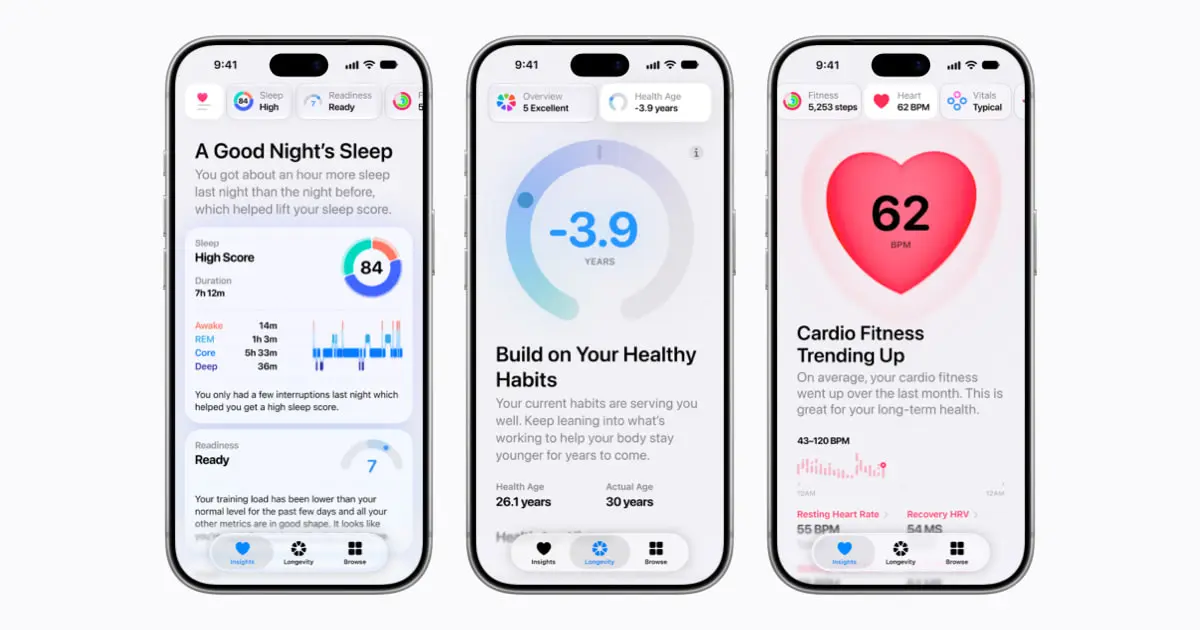
Apple describes an app built with Apple Intelligence at its core that adapts to a person’s health metrics. The main pieces, according to Apple:
- Insights tab: timely summaries covering heart, sleep, readiness, fitness, vitals and cycle tracking through the day.
- For You: recommendations based on daily habits, such as advice on adjusting a wind-down routine after several nights of interrupted sleep.
- Longevity tab: long-term trends across heart health, sleep, mental wellbeing, movement, metabolic health, hearing and nutrition.
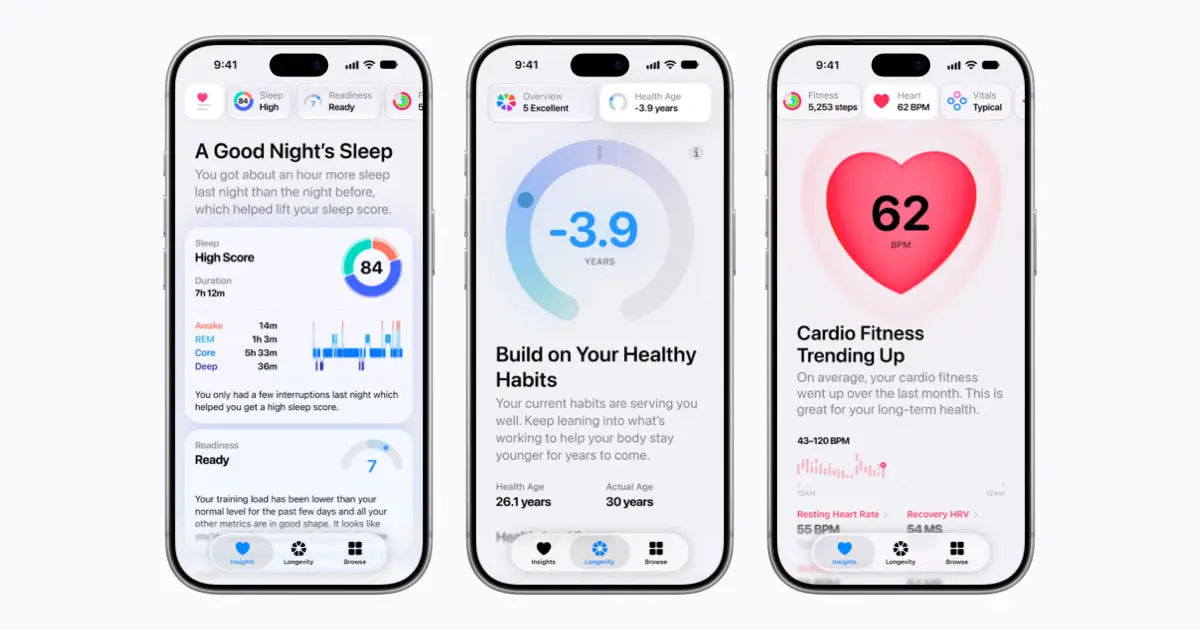
- Health Age: a figure built from Apple Watch data, including VO2 max, resting heart rate, sleep and heart rate variability, that shows how the body is tracking against chronological age.
- Clinical lab data: users can add results such as A1c and LDL cholesterol to the long-term picture.
- Education: videos and articles featuring Health app clinical experts.
MacRumors adds that Apple Watch Series 12 and Apple Watch Ultra 4 owners get a readiness score, and that Apple offers a $119 lab panel from Quest Diagnostics that feeds into Health Age. Apple’s own page does not mention that panel, so treat the figure as MacRumors’ report.
How do the at-home movement evaluations work?
Apple says the update lets people measure flexibility, strength, balance, movement mechanics and VO2 max with an iPhone camera and an Apple Watch, with real-time audio and visual feedback. No specialized equipment is needed.
Apple states that the feature uses on-device vision-based models developed with clinical experts, runs entirely on the device, and never records, stores or shares video. The VO2 max test needs an Apple Watch, AirPods Pro 3 or a third-party heart rate sensing device.
Which devices can run it?
Apple says the redesigned app will be available on Apple Intelligence-enabled iPhone and iPad models with the latest software, and that select features are iPhone only. Apple’s newsroom page does not list the models.
The Hong Kong site New Mobile Life reported that a full experience needs an iPhone 15 Pro or newer. Apple has not confirmed that list on the page we read, and neither MacRumors nor 9to5Mac names specific models, so check Apple’s Apple Intelligence availability page before relying on it.
Other conditions from Apple: Health Age requires Apple Watch, some features require users to be 18 or older, and some features may not be available in all regions or languages. Apple Intelligence itself needs Siri and the device language set to one of its listed languages.
Prices
There is no separate price. Apple calls the redesigned Health app a free software update, and it is part of iOS 27.3. Apple does not list a fee on its newsroom page for the app itself.
The cost to watch is hardware. Health Age needs an Apple Watch, and the readiness score needs the Series 12 or Ultra 4, per MacRumors. Apple does not give prices for those in the pages we read. The $119 Quest Diagnostics panel is MacRumors’ figure and applies as that outlet states it.
Who it suits
Owners of Apple Intelligence iPhones. If your phone is on Apple’s supported list, this is a free upgrade with a more guided view of sleep, heart and fitness data.
Apple Watch wearers. Health Age and the VO2 max test lean on Watch data, so the new tabs make the most of hardware you may already own.
People who want to track long-term health. The Longevity tab and lab data support a longer view, but Apple frames it as insight, not medical advice, so speak to a clinician about any health concern.
Who should wait. If you have an older iPhone, no Apple Watch, or you do not use Apple Intelligence, the main features may be missing or limited. The public beta is also still a beta, so MacRumors and 9to5Mac advise backing up first.
What is still unknown?
Apple has not given a release date beyond “later this year” for the free update. The official page does not list the supported iPhone and iPad models, and Apple says it will continue adding languages.
Next step: read Apple’s newsroom post and its Apple Intelligence availability page, then check Settings for the update when iOS 27.3 arrives.